You need to trust your shackle when lifting heavy things. Safety is important, and reliability is too. Industry rules say you should pick shackles that pass tough tests. Certified shackles like the G209 3/4 bow shackle are tested with chemicals and proof-loads. This means they can handle hard work. The shackle is made from strong alloy steel. It has a design that is easy to use. This makes it a great choice for strength and feeling safe.
Key Takeaways
Always look at the Working Load Limit (WLL) before you lift. If you use a shackle with a WLL that is too low, accidents can happen.
Pick shackles that have important safety certifications like CE and ISO9001. Shackles with these certifications have passed tough tests to make sure they are safe.
Check your shackles often for any damage or signs of wear. Look for cracks, bends, or pins that are missing to keep lifting safe.
Use the right shackle for your job. The G209 3/4 bow shackle works best for heavy lifting. Standard shackles are better for lighter jobs.
Take care of your shackles by cleaning, oiling, and storing them the right way. Doing this often helps them last longer and keeps you safe.
Trust Factors for Shackles
Strength and Load Ratings
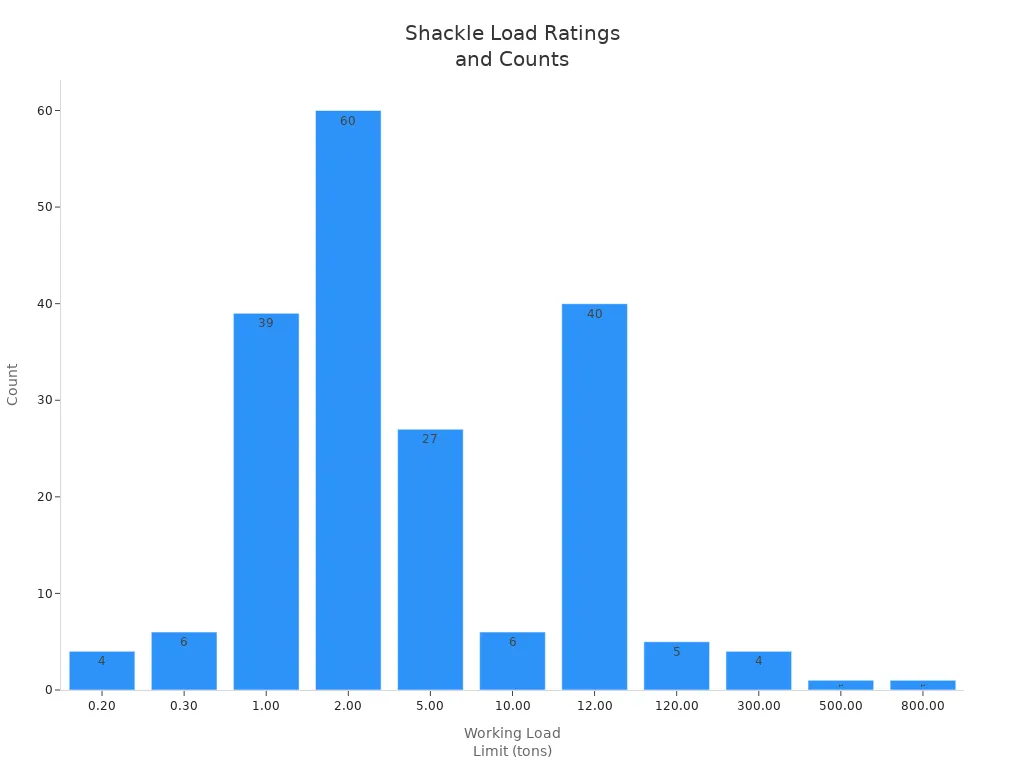
You need to know how much weight your shackle can hold. This is called the Working Load Limit (WLL). Always check the WLL before you lift anything. If you use a shackle that is too weak, it can break and cause accidents. The table below shows common WLLs for shackles used in lifting:
Working Load Limit (tons) | Count |
0.20 | 4 |
0.30 | 6 |
1.00 | 39 |
2.00 | 60 |
5.00 | 27 |
10.00 | 6 |
12.00 | 40 |
120.00 | 5 |
300.00 | 4 |
500.00 | 1 |
800.00 | 1 |
You should always pick a shackle with a bow and pin that fit your slings or chains. Make sure the WLL is higher than the load you want to lift. Do not use a shackle that is too big, as it can make the lift unstable.
Certification and Compliance
You should trust shackles that meet strict rules. These rules are called standards. Some important standards are ISO 8539, ASTM A952, and OSHA 1910. In many industries, you may also see ISO 16857, EN 13889, ASME B30.26, and DNV standards. Shackles with these certifications go through tough tests. This means they are safe for lifting heavy loads.
Durability and Materials
The material of a shackle affects how long it lasts. Alloy steel and high-strength carbon steel are common choices. They give you high strength and good wear resistance. The table below compares materials:
Material | Strength | Durability | Load Handling Capability |
Grade 80 Steel | Very High | Excellent | Heavy loads |
Grade 100 Steel | Extremely High | Exceptional | Maximum load conditions |
Alloy steel also works well under stress and resists wear. Stainless steel resists rust better, so you might use it outdoors or near water.
Safety Features
Safety features help you avoid accidents. You should always inspect shackles before use. Look for damage, missing markings, or bent parts. Never lift more than the WLL. Use the right shackle for your job and align the load properly. Many shackles have safety pins. These pins stop the shackle from opening by accident. You may see split pins, spring pins, or locking pins. Each type helps keep your load secure.
Tip: Only trained workers should use shackles for lifting. Regular checks and good training keep everyone safe.
G209 3/4 Bow Shackle Features
Alloy Steel Construction
The G209 3/4 bow shackle is made from forged alloy steel. This makes it very strong and tough. It lasts a long time and does not break easily. Drop forging and heat treatment make it even stronger. These steps help the shackle resist bending. The table below shows important facts:
Parameter | Value |
Working Load Limit | 4.75 Ton (10,500 lbs) |
Breaking Load | 19–28 Ton |
Material | Forged Alloy Steel |
Surface Finish | Dacromet |
Pin Type | Screw Pin |
Standard | US Type G209 |
Certification | CE, ISO9001 |
You can use this shackle for heavy jobs. The Dacromet finish keeps it safe from rust. It works well outside or near water.
Certifications and Testing
The G209 3/4 bow shackle follows strict safety rules. It has CE and ISO9001 certifications. This means it passes tough tests. The shackle is made with drop forging, machining, and heat treatment. Each step makes it strong and safe. It also meets Federal Specification RR-C-271F. So, you know it follows industry rules.
User-Friendly Design
The G209 3/4 bow shackle is simple to use. The wide bow shape lets you connect ropes, chains, or slings easily. The screw pin helps you load and unload fast. Many people like the screw collar pin. It helps them attach the shackle safely. The shackle is not heavy. You can carry it without much effort. It stays strong even when lifting heavy things.
Application Versatility
You can use the G209 3/4 bow shackle in many places. It works in construction, maritime, and off-road recovery. The rounded shape lets you lift from different sides. This is better than standard shackles for side loading. It fits bigger crane hooks or more sling legs. You can use it for many lifting and rigging jobs.
Tip: Pick the G209 3/4 bow shackle when you need a strong, certified, and easy connector for heavy lifting.
Standard Shackles Overview
Common Types and Materials
There are many types of standard shackles used for lifting. Each kind has its own shape and pin style. You pick the shackle that fits your job best. The material matters because it affects strength and how long it lasts. Check the table below to see the main types and materials:
Type of Shackle | Description | Suitable Applications |
Screw Pin D-Shackle | Has a threaded pin you can put in or take out easily. | Good for quick or short-term jobs. |
Bolt-Type D-Shackle | Has a bolt, nut, and cotter pin for more safety. | Best for long-term or important jobs. |
Round Pin D-Shackle | Made for light jobs where the pin can turn. | Used for light-duty work. |
Carbon Steel | Strong and lasts long for most uses. | Used for general jobs. |
Stainless Steel | Does not rust, so it works near water. | Great for boats and outside jobs. |
Alloy Steel | Very strong and good for heavy lifting. | Used for heavy-duty lifting. |
Galvanized/Coated | Stops rust and helps the shackle last longer. | Good for tough places. |
Screw pin shackles are easy to use for fast jobs. Bolt-type shackles are safer for important lifts. Stainless steel shackles do not rust, so use them near water. Alloy steel shackles are best for heavy things.
Load Ratings Range
Standard shackles come in different sizes for different weights. Small shackles lift light things. Big shackles lift heavy things. The working load limit (WLL) tells you the most weight it can hold. Always check the WLL before using a shackle. Pick the right size for your job. Some shackles hold less than one ton. Some can lift hundreds of tons. Never use a shackle for more weight than it says.
Tip: Always look at the markings on the shackle. The WLL and size are stamped on the shackle or pin.
Certification Variability
Standard shackles follow different rules. Some shackles have strict standards. Others might not have any certification. Common standards are:
Some shackles meet ISO or EN rules. Some are made for special jobs like oil and gas. Always check for certification marks. Certified shackles are safer to use.
Typical Uses
People use standard shackles in many places. Builders use them to lift heavy beams. Sailors use stainless steel shackles on boats. Off-road drivers use shackles to pull cars. You also see them in factories, ports, and farms. Each shackle type is made for a special job. Pick the right shackle to keep everyone safe.
Note: Always check shackles before you use them. Look for cracks, bends, or missing pins. Safe shackles help stop accidents.
G209 3/4 Bow Shackle vs Standard Shackles
Strength and Reliability Comparison
You want a shackle that holds up under pressure. The G209 3/4 bow shackle uses forged alloy steel. This material gives you high strength and toughness. Standard shackles may use carbon steel or stainless steel. These materials work well for lighter loads. The G209 3/4 bow shackle handles heavy lifting and resists bending. You can trust it for jobs where safety matters most.
Shackle Type | Material | Working Load Limit | Breaking Load |
G209 3/4 Bow Shackle | Alloy Steel | 4.75 Ton | 19–28 Ton |
Standard D-Shackle | Carbon/Stainless | 0.5–3 Ton | 2–12 Ton |
Safety and Certification Differences
Safety comes first when you lift heavy things. The G209 3/4 bow shackle meets CE and ISO9001 standards. You know it passed tough tests. Standard shackles may not always have certifications. Some follow ASTM or ISO rules, but others do not. Always check for markings and certificates. Certified shackles help you avoid accidents and follow industry rules.
Tip: Look for certification marks on the shackle body or pin. These marks show the shackle meets safety standards.
Ease of Use and Maintenance
You need a shackle that is easy to use and care for. The G209 3/4 bow shackle has a wide bow shape. You can connect ropes or slings quickly. The screw pin lets you load and unload fast. Standard shackles may have bolt or round pins. These pins work well for different jobs. Maintenance keeps your shackles safe. Follow these steps:
Inspect shackles regularly for wear, damage, or corrosion.
Clean shackles to remove dirt, mud, and rust buildup.
Lubricate moving parts, especially the pin, to ensure smooth operation.
Replace any damaged or worn shackles with high-quality parts.
After servicing, check alignment and fit to maintain proper function.
Best Use Cases
You should pick the right shackle for your job. The G209 3/4 bow shackle works best for heavy lifting, construction, and shipping. It fits jobs where you need strength and certified safety. Standard shackles suit lighter tasks, quick jobs, or places near water. Builders, sailors, and off-road drivers use standard shackles for everyday work.
Note: Choose the G209 3/4 bow shackle when you need reliability, certification, and easy handling for tough jobs.
Which Shackle Should You Trust?
You want a shackle that keeps your team safe and your job running smoothly. The G209 3/4 bow shackle stands out because:
It uses strong alloy steel.
It meets strict certifications like CE and ISO9001.
It offers easy handling and reliable performance.
Always check for certification marks and choose high-quality materials. When you need strength and safety, trust the G209 3/4 bow shackle for your lifting and rigging needs.
FAQ
What makes the G209 3/4 bow shackle different from standard shackles?
You get a shackle made from forged alloy steel. It meets strict CE and ISO9001 certifications. The wide bow design lets you connect more types of rigging gear. You can trust it for heavy lifting jobs.
How do you check if a shackle is certified?
Look for marks on the shackle body or pin. You should see codes like "CE," "ISO," or "G209." These marks show the shackle passed safety tests.
Can you use the G209 3/4 bow shackle outdoors?
Yes, you can. The Dacromet finish protects the shackle from rust and weather. You can use it in construction, shipping, or marine jobs.
How often should you inspect your shackles?
You should inspect shackles before every use. Check for cracks, bends, or missing pins. Replace any damaged shackles right away to keep your lifts safe.
What is the best way to maintain your shackles?
Clean shackles after use.
Lubricate the pin and threads.
Store them in a dry place.
Replace worn or damaged shackles.
These steps help your shackles last longer and work safely.

 English
 العربية
 Français
 Русский
 Español
 Português
 Deutsch
 italiano
 日本語
日本語 한국어
한국어 Nederlands
 Tiếng Việt
 ไทย
ไทย Polski
 Türkçe
 አማርኛ
አማርኛ ພາສາລາວ
 ភាសាខ្មែរ
 Bahasa Melayu
 ဗမာစာ
ဗမာစာ தமிழ்
தமிழ் Filipino
 Bahasa Indonesia
 magyar
 Română
 Čeština
 Монгол
 қазақ
қазақ Српски
 हिन्दी
 فارسی
فارسی Kiswahili
 Slovenčina
 Slovenščina
 Norsk
Norsk Svenska
 українська
 Ελληνικά
 Suomi
Suomi Հայերեն
 עברית
עברית Latine
 Dansk
Dansk اردو
اردو Shqip
Shqip বাংলা
বাংলা Hrvatski
 Afrikaans
 Gaeilge
 नेपाली
 Oluganda


