Off-roading or marine recovery often comes with unexpected risks—metal shackles snapping and sending debris flying, heavy gear weighing you down, or expensive equipment getting scratched. If you’ve ever faced these headaches, you’re not alone. A soft shackle is the game-changing solution designed to address these pain points, offering a safer, more versatile alternative to traditional hardware like the bow shackle. Unlike rigid metal bow shackles, soft shackles are crafted from high-strength synthetic fibers, blending durability with flexibility for a range of applications. In this guide, we’ll break down everything you need to know about using a soft shackle effectively, from its core design to step-by-step instructions and expert insights—so you can tackle recoveries with confidence.
What Is A Soft Shackle?
A soft shackle is a lightweight, high-tensile connection tool made from advanced synthetic fibers such as Dyneema (SK75/SK78) or UHMWPE. Its simple yet robust design features a stopper knot (typically a diamond knot) on one end and a spliced loop on the other, creating a secure, tool-free connection point. This construction sets it apart from the bow shackle, a heavy-duty metal fastener known for its rigid “D” or “bow” shape and reliance on bolts or pins for stability.
Soft shackles are engineered for versatility: they shine in off-road vehicle recoveries, marine applications (replacing carabiners or quicklinks), and towing tasks. While bow shackles excel in extreme heavy-load scenarios where metal rigidity is non-negotiable, soft shackles offer unmatched practicality for most recreational and light-commercial uses—combining strength with maneuverability that metal can’t match.
Why Choose A Soft Shackle Over A Bow Shackle?
The decision to switch from a bow shackle to a soft shackle boils down to safety, practicality, and adaptability. Here’s why soft shackles are becoming a go-to for enthusiasts and professionals alike:
Superior Safety: If a bow shackle fails under tension, its metal components become dangerous projectiles capable of causing serious injury or damage. A soft shackle, by contrast, lacks this projectile force—even if it snaps, the flexible synthetic material minimizes harm.
Practical Design Perks: Soft shackles are drastically lighter than bow shackles, making them easy to carry and store (they fit in glove boxes or under seats). They also float in water or mud, eliminating the frustration of losing heavy metal shackles in harsh terrain. Plus, their soft material won’t scratch vehicle paint, boat decks, or equipment—a common downside of metal bow shackles.
Durability & Resilience: Unlike bow shackles, which are prone to rust and corrosion in wet or salty environments, soft shackles resist corrosion and abrasion (especially models with protective sheaths). High-quality Dyneema fibers ensure they stand up to heavy loads without compromising flexibility.
Versatile Flexibility: Soft shackles bend and conform to tight recovery points, making them ideal for awkward angles where rigid bow shackles might struggle. They also double as connectors for two tow straps, adding to their utility.
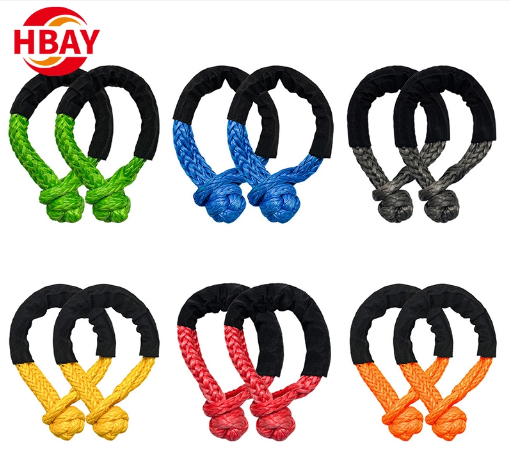
Step-by-Step Guide To Using A Soft Shackle
Using a soft shackle is straightforward, but proper technique ensures safety and effectiveness. Follow these steps for off-road, marine, or towing applications:
Pre-Use Inspection
Before every use, inspect your soft shackle thoroughly. Check for fraying, cuts, or abrasion in the fibers—even small nicks can weaken the structure. Verify that the working load limit (WLL) matches your task (e.g., vehicle weight or load size). Avoid using shackles with UV damage, excessive dirt trapped in fibers, or loose knots—replace them immediately if compromised.
Preparation
Identify only rated recovery points on your vehicle, boat, or equipment—never use towballs, unrated chassis holes, or tie-down points. If the soft shackle’s diamond knot is tight, gently loosen it to make the loop easier to manipulate. For marine use, ensure the shackle is dry (wet fibers can reduce breaking strength slightly) and free of salt residue.
Attachment Process
Thread the loop end of the soft shackle through the rated recovery point. Next, pass the diamond knot through the loop to create a secure connection. Pull the knot snugly against the loop—ensure there are no twists in the fiber, as this can unevenly distribute force. For connecting two tow straps, loop both strap ends over the knotted end of the soft shackle, then pass the knot through the loop and tighten.
Load Application
Apply tension gradually—avoid sudden acceleration or shock loads, which can strain the shackle. If using a kinetic rope, let the rope’s stretch create smooth, controlled pull rather than forcing the load. Monitor the shackle during use; adjust if the direction of force shifts to maintain a secure connection.
Post-Use Steps
Once the task is complete, release all tension from the shackle before undoing it. Gently push the diamond knot back through the loop to loosen (wiggle it slightly if it’s tight from tension). If the shackle is dirty, muddy, or salty, rinse it with fresh water and air-dry it away from direct sunlight—never store damp shackles, as this can degrade fibers.
Key Considerations When Selecting A Soft Shackle
Choosing the right soft shackle ensures safety and performance. Keep these factors in mind:
Load Capacity: Match the shackle’s WLL and break strength to your needs. For example, a 3/8” synthetic soft shackle can have a break strength of 46,250 lbs and a WLL of 15,416 lbs—ideal for mid-sized 4x4s.
Material Quality: Prioritize shackles made from 12-strand Dyneema (SK75/SK78) or UHMWPE. These fibers offer excellent abrasion resistance and shape recovery under tension.
Size: Diameter (8mm, 10mm, 12mm) determines strength—12mm is standard for 4x4 recoveries. Length (typically 22”) should be practical for your use case (e.g., shorter lengths for tight spaces).
Protective Features: Opt for models with abrasion-resistant sheaths. These sacrificial layers shield the core fiber from sharp surfaces and extend the shackle’s lifespan.
Maintenance & Care Tips For Longevity
To maximize the life of your soft shackle (and ensure safety), follow these care guidelines:
Store the shackle in a dry, UV-protected container (e.g., a small bag) to prevent fiber degradation from sunlight.
Avoid dragging the shackle through dirt, rocks, or sharp surfaces—this weakens fibers over time. Use a protective sleeve if contact with abrasive materials is unavoidable.
Rinse and dry the shackle after use in mud, water, or saltwater. Never store it damp, as moisture can promote mildew or fiber breakdown.
Replace your soft shackle every 2–3 years (or sooner with heavy use). Dyneema loses approximately 5% of its strength annually, even with proper care.
Keep the shackle away from excessive heat—high temperatures reduce its performance threshold and shorten its lifespan.
Expert Opinions On Soft Shackles
Rhino USA: Soft shackles are a safer alternative to metal shackles, offering lightweight portability, floatability, and scratch-free use. Ideal for UTV and 4x4 recovery, they work seamlessly with tow straps and kinetic ropes. Backed by a 100% money-back guarantee and lifetime warranty.
Unsealed4x4: Most 4x4 recovery soft shackles are 12mm thick, made from 12-strand Dyneema (SK75/SK78). Their simple construction (strop + stopper knot + spliced end) minimizes injury risk if failed. Nicked or damaged shackles should be discarded immediately. Homemade soft shackles are not recommended for 4x4 recovery, as hand-tightened knots create weak points.
Access Ropes: Crafted from high-strength UHMWPE fibers, soft shackles are corrosion-resistant—perfect for marine use. They require no tools for setup, but users must inspect for fraying before and after use. Overloading beyond the rated WLL is a major safety risk.
Tracmarc: Always use rated recovery points (not towballs) with soft shackles. Keep knots outside connection points to prevent wear and simplify release. Avoid dragging shackles through dirt, rinse and dry wet units before storage, and apply smooth tension (no shock loads) for optimal performance.
Animatedknots: Soft shackles are created with hollow-braid rope and a diamond knot—final knot tightening is critical (use vice-grip pliers for proper tension). The Edwards design is easier to release than the Kohlhoff Shackle. Breakage typically occurs at 175% of the line’s strength, meaning the connected rope will fail before the shackle.
Euro4x4parts: Soft shackles are lighter and more compact than steel shackles. They can connect two recovery straps by looping ends over the knotted end. Compatible with 4x4 recovery eyes, their synthetic fibers have no elasticity, ensuring stable pulls during recovery.
FAQs About Soft Shackles & Bow Shackles
Q: What size soft shackle do I need for my 4x4?
A: Size depends on your vehicle’s weight and the load. Most 4x4s use 12mm soft shackles, but lighter UTVs may work with 8mm or 10mm models. Always match the shackle’s WLL to your vehicle’s gross weight.
Q: Can I use a soft shackle instead of a bow shackle?
A: Yes, for most recreational and light-commercial uses. Soft shackles are safer and more practical for off-roading, marine, and towing tasks. Bow shackles are better for extreme heavy-load scenarios where metal rigidity is required.
Q: How do I know if my soft shackle is worn out?
A: Signs of wear include fraying, cuts, abrasion, loose knots, UV discoloration, or reduced flexibility. If you notice any of these, replace the shackle immediately.
Q: Is it safe to make a homemade soft shackle?
A: No, especially for 4x4 recovery. Homemade shackles use hand-tightened knots, which create weak points. Factory-made soft shackles have winch-tightened knots and meet safety standards.
Q: Do soft shackles work in wet conditions?
A: Yes—they float in water and resist corrosion. However, wet fibers can reduce breaking strength slightly, so rinse and dry them after use, and avoid shock loads in wet conditions.
A soft shackle is an indispensable tool for anyone involved in off-roading, marine activities, or towing—offering safety, versatility, and practicality that traditional bow shackles can’t match. By following the step-by-step usage guide, selecting the right size and material, and maintaining your shackle properly, you’ll ensure safe, reliable performance for years to come. Whether you’re recovering a stuck 4x4 or securing gear on a boat, the soft shackle’s lightweight design, floatability, and damage-free operation make it a superior choice. Invest in a quality soft shackle today, and tackle your next adventure with the confidence that comes from using the right tool for the job.

 English
 العربية
 Français
 Русский
 Español
 Português
 Deutsch
 italiano
 日本語
日本語 한국어
한국어 Nederlands
 Tiếng Việt
 ไทย
ไทย Polski
 Türkçe
 ພາສາລາວ
 ភាសាខ្មែរ
 Bahasa Melayu
 ဗမာစာ
ဗမာစာ தமிழ்
தமிழ் Filipino
 Bahasa Indonesia
 magyar
 Română
 Монгол
 қазақ
қазақ हिन्दी
 فارسی
فارسی Norsk
Norsk Svenska
 українська
 Ελληνικά
 Suomi
Suomi עברית
עברית Latine
 Dansk
Dansk اردو
اردو Shqip
Shqip বাংলা
বাংলা Afrikaans
 Gaeilge
 नेपाली
 Oluganda


