
Hebei Anyue Metal Manufacturing Co., Ltd.
Professional hardware rigging manufacturing enterprise
- All
- Product Name
- Product Keyword
- Product Model
- Product Summary
- Product Description
- Multi Field Search
English


| Quantity: | |
|---|---|
Product Advantage
When sourcing critical safety equipment, the structural integrity and load-bearing capabilities of the hardware are paramount. Our locking carabiners are meticulously engineered from aviation-grade aluminum alloy, specifically 7075-T6, as well as premium 304 stainless steel. These advanced materials provide an exceptional static load-bearing capacity ranging from 20-30kN (approximately 2000-3000kg). This massive strength threshold ensures reliable security under extreme tension. Furthermore, the products strictly comply with rigorous international safety standards, including EN 12275, UIAA, CE, and ISO certifications. By meeting these global benchmarks, the carabiners significantly reduce procurement risks for safety-critical operations. Selected professional models are also equipped with advanced automatic locking systems, which effectively prevent accidental gate opening during complex maneuvers, providing an essential layer of security for high-intensity requirements.
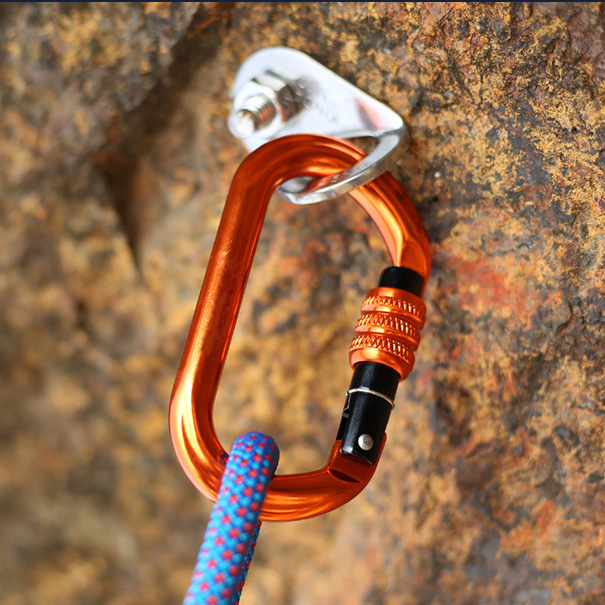
Minimizing gear weight without sacrificing structural stability is a core advantage of our carabiner design. The aviation-grade aluminum alloy models weigh only 50-100g, achieving an impressive 10:1 strength-to-weight ratio. This lightweight profile helps reduce the overall burden on users carrying extensive equipment loads. In addition to weight optimization, the surface of the carabiners undergoes specialized treatments, such as advanced anodizing. This process creates a highly durable barrier that provides outstanding anti-oxidation and salt spray corrosion resistance. Whether exposed to high humidity, varying temperatures, or challenging altitudes, the hardware maintains its structural integrity. For environments demanding extreme wear resistance, the 304 stainless steel variants offer unparalleled durability against constant friction and elemental exposure.
The structural geometry of a carabiner directly impacts its load distribution and connection efficiency. Our product line features a variety of specialized shapes, including O-shaped, D-shaped, and pear-shaped designs. The asymmetric D-shape naturally directs the load to the spine—the strongest axis of the carabiner—maximizing load-bearing efficiency. Conversely, pear-shaped and O-shaped designs provide ample internal clearance, making them highly suitable for managing multiple rope connections, organizing gear, and constructing complex protection systems. Certain models also integrate dedicated tool hanging points and secure key-lock noses, which prevent snagging on webbing or ropes. These thoughtful design details streamline equipment management and improve operational efficiency during critical tasks.
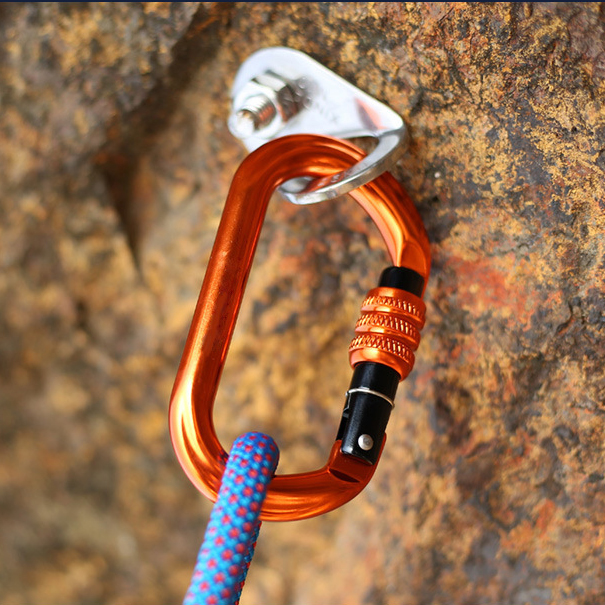
Investing in durable hardware translates directly to long-term economic advantages for professional teams and organizations. Thanks to the combination of high-density 7075-T6 aluminum, 304 stainless steel, and industrial-grade surface plating or anodizing, these carabiners boast an extended service life of 5-10 years. This longevity far exceeds the lifespan of standard metal hooks, significantly reducing the frequency and cost of equipment replacement. High cost-effective models, such as our foundational D-type locking carabiners, provide dependable performance at a competitive price point. This allows organizations to procure essential safety gear in bulk, optimizing team equipment budgets while ensuring every piece of hardware meets strict international safety and performance criteria.
Product Parameters
| Parameter | Specification | Notes |
Material | 7075-T6 Aluminum / 304 Stainless Steel | High strength, lightweight, corrosion-resistant |
Load Capacity | Static: 22-30 kN (≈2240-3060 kg) | UIAA/EN 12275 certified |
Weight | 50-100g (varies by model) | Optimized for portability |
Gate Type | Straight / Bent / Wire / Auto-locking | Auto-locking for added safety |
Opening Size | 15-25mm (varies by model) | Fits ropes & slings |
Certifications | UIAA, EN 12275, CE, ISO 9001 | Meets international safety standards |
Finish | Anodized / Powder-coated / Polished | Enhanced durability & aesthetics |
Operating Temp. | -30°C to +80°C (-22°F to +176°F) | Suitable for extreme climates |
Product Applications


The locking carabiner hook serves as the core safety equipment for professional rock climbing, mountaineering, and glacier expeditions. It is essential for securely connecting dynamic ropes, safety harnesses, and quickdraw systems, as well as for constructing reliable anchor points and descent setups. Designed to withstand severe high-impact forces encountered on steep rock walls, this climbing hook ensures maximum security. The advanced automatic locking mechanisms, such as screw-lock or double-lock designs, effectively prevent accidental gate opening caused by rope friction or rock contact, making it highly suitable for avant-garde climbing, big wall ascents, and critical protection scenarios.
For demanding industrial environments, including construction sites, scaffolding work, and power grid maintenance, this anti-fall hook provides indispensable security. It is widely used to secure safety lanyards, fall arresters, and heavy tool hanging points. Built for exceptional wear resistance, it handles the rigorous demands of long-term, frequent industrial use. The self-locking gate design is particularly crucial in these settings, as it prevents accidental disengagement triggered by heavy machinery vibration or unintentional contact, ensuring workers remain safely anchored at all times.
Beyond extreme sports, this lightweight hiking buckle is highly practical for outdoor camping and backpacking. It is the perfect gear connector for hanging tents, securing heavy backpacks, attaching portable lighting fixtures, or setting up folding chairs and canopies. The ergonomic shape is ideal for organizing messy guy lines and gear, allowing for multi-angle fixation. This significantly improves camp setup efficiency and keeps your outdoor equipment neatly arranged without adding unnecessary bulk to your pack.
In everyday scenarios, this multifunctional daily hook combines robust portability with practical convenience. It serves as an ultra-secure keychain, a dependable pet leash connector, or a heavy-duty link for gym equipment and suspension trainers. Whether you are cycling, traveling, or organizing sports gear, this portable connecting buckle offers a reliable, easy-to-use solution for light-duty attachment needs.
To ensure maximum safety and prolong the lifespan of your climbing hook, please strictly follow this authoritative operation and maintenance guide.
FAQ
Understanding the variations is crucial for selecting the right gear for specific applications:
The choice of material directly impacts the weight, strength, and durability of the carabiner:
Absolutely not. Standard snap hooks or general-purpose hardware clips are not engineered, tested, or rated to withstand the extreme dynamic forces generated during a climbing fall. Using a non-certified snap hook for any life-safety application poses a severe risk of catastrophic failure. Always ensure that the carabiners you purchase for climbing, rigging, or fall protection bear recognized safety certifications, such as UIAA or CE standards, which explicitly verify their capacity for life-safety applications.
Regular safety assessments are mandatory before any critical use. You should evaluate the equipment based on the following criteria to ensure maximum safety:


