
Προβολές: 0 Συγγραφέας: Επεξεργαστής ιστότοπου Ώρα δημοσίευσης: 29-10-2026 Προέλευση: Τοποθεσία


Η επιλογή του σωστού υλικού για εναέρια ανυψωτικά υπερβαίνει κατά πολύ μια απλή αγορά εμπορευμάτων. Η απόφασή σας επηρεάζει άμεσα την γενική ασφάλεια του ιστότοπου, τη συμμόρφωση με τους κανονισμούς και τη σταθερότητα του φορτίου. Οι αστοχίες της εξάρτισης προκαλούν συνήθως καταστροφικές ζημιές και σοβαρούς τραυματισμούς. Επομένως, πρέπει να δείτε αυτήν τη διαδικασία επιλογής ως μια κρίσιμη στρατηγική μετριασμού του κινδύνου. Κάθε ανελκυστήρας λειτουργεί υπό συγκεκριμένες δυναμικές φορτίων, περιβαλλοντικές συνθήκες και αυστηρά πρότυπα ASME και OSHA. Ένα αταίριαστο εξάρτημα απειλεί ζωές και ακινητοποιεί τις λειτουργίες αμέσως.
Αυτό το άρθρο παρέχει στις ομάδες προμηθειών και στους επαγγελματίες χειριστές ένα πλαίσιο αξιολόγησης που βασίζεται σε στοιχεία. Θα σας βοηθήσουμε να καθορίσετε και να προμηθευτείτε το ακριβές υλικό που απαιτείται για την εγκατάσταση σας. Θα μάθετε πώς να ευθυγραμμίζετε τα όρια φορτίου εργασίας, τους βαθμούς υλικών και τις φυσικές διαμορφώσεις ώστε να ταιριάζουν με τις πιο απαιτητικές εφαρμογές σας. Κατανοώντας αυτές τις αρχές μηχανικής, μπορείτε να ασφαλίσετε εξοπλισμό βελτιστοποιημένο τόσο για ασφάλεια όσο και για μέγιστη λειτουργική απόδοση.
Να καθορίζετε πάντα τα βασικά βάρη φορτίου πριν καθορίσετε α άγκιστρο ανύψωσης βαρέως τύπου . Δεν μπορείτε απλώς να βασιστείτε στο στατικό βάρος του αντικειμένου. Οι μηχανισμοί ανύψωσης πρέπει να υπολογίζουν τις δυναμικές δυνάμεις κατά τη διάρκεια της ανύψωσης. Η φόρτιση κρουσμάτων συμβαίνει όταν ένα φορτίο πέφτει ελαφρά και σταματά απότομα. Αυτή η ενέργεια πολλαπλασιάζει την ένταση αμέσως. Οι γωνίες σφεντόνας πολλαπλών ποδιών αυξάνουν επίσης την πίεση σε κάθε μεμονωμένο σημείο σύνδεσης. Μια γωνία σφεντόνας 30 μοιρών ασκεί σημαντικά μεγαλύτερη δύναμη από μια κάθετη κοτσαδόρο 90 μοιρών. Ο υπολογισμός του πραγματικού ορίου φόρτου εργασίας διασφαλίζει ότι το υλικό σας χειρίζεται αυτές τις δυνάμεις αιχμής με ασφάλεια.
Συνηθισμένο λάθος: Πολλοί χειριστές υποθέτουν ότι το WLL που είναι σφραγισμένο στο υλικό ισούται με τη δύναμη θραύσης. Το WLL είναι απλώς το μέγιστο ασφαλές φορτίο λειτουργίας. Η υπέρβαση αυτού του ορίου θέτει σε κίνδυνο τη μεταλλουργική δομή μόνιμα.
Τα περιβάλλοντα λειτουργίας υπαγορεύουν σε μεγάλο βαθμό τις μεταλλουργικές απαιτήσεις. Το υπερβολικό κρύο κάνει τον τυπικό χάλυβα εύθραυστο, αυξάνοντας τον κίνδυνο ξαφνικών κουμπωμάτων. Η έντονη θερμότητα αποδυναμώνει το μέταλλο γρήγορα, μειώνοντας τη συνολική χωρητικότητά του. Τα διαβρωτικά χημικά ή η έκθεση σε αλμυρό νερό απαιτούν εξειδικευμένες επικαλύψεις ή μοναδικά κράματα. Ο τυπικός ανθρακούχο χάλυβας αποικοδομείται γρήγορα κάτω από αυτές τις σκληρές συνθήκες. Πρέπει να αξιολογήσετε διεξοδικά το περιβάλλον του χώρου εργασίας σας. Επιλέξτε υλικό ικανό να αντισταθεί σε τοπική φθορά. Τα γαλβανισμένα φινιρίσματα ή οι εξειδικευμένες εποξειδικές επιστρώσεις παρέχουν συχνά την απαραίτητη προστασία σε θαλάσσια περιβάλλοντα.
Πρέπει να ταιριάξετε ακριβώς το άνοιγμα του λαιμού με τον κύριο σύνδεσμο ή το δεσμό σας. Η διάσταση του μπολ πρέπει να στηρίζει τέλεια το σημείο ανύψωσης φορτίου. Η κακή γεωμετρία οδηγεί σε επικίνδυνες καταστάσεις φόρτωσης σημείων. Το σημείο φόρτωσης πιέζει τη λεπτή άκρη παρά το χοντρό μπολ. Αυτή η αναντιστοιχία μειώνει δραστικά τη συνολική χωρητικότητα και κάμπτει το υλικό. Επαληθεύστε όλες τις διαστάσεις σε σχέση με τα εξαρτήματα που ταιριάζουν πριν ολοκληρώσετε μια αγορά.
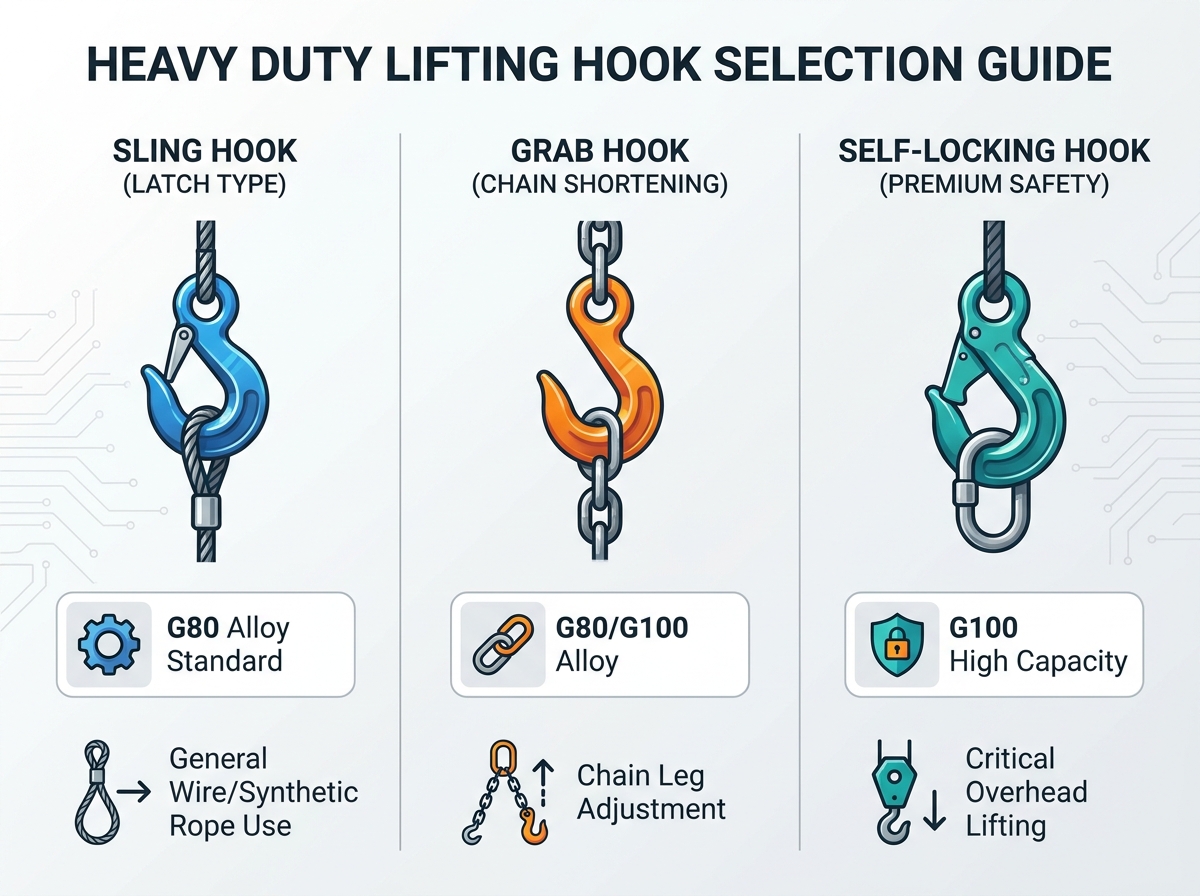
Ο Το sling hook παραμένει μια τυπική επιλογή για γενικές εφαρμογές συρματόσχοινου και συνθετικών web. Διαθέτουν ευρύ άνοιγμα στο λαιμό για εύκολες συνδέσεις. Τα συνεργεία κατασκευής τα ευνοούν για την ευελιξία και την ταχύτητά τους. Ωστόσο, τα τυπικά μάνδαλα ελατηρίου έχουν διακριτούς περιορισμούς. Υπό συνθήκες υψηλών κραδασμών, αυτά τα βασικά μάνδαλα μπορούν να ανοίξουν. Αυτή η δόνηση δημιουργεί ένα προσωρινό κενό όπου οι συνθετικές ιμάντες μπορεί να γλιστρήσουν έξω. Πάντα να αξιολογείτε τα επίπεδα κραδασμών πριν ανοίξετε τυπικά μάνδαλα ελατηρίου.
Χρησιμοποιείτε ένα άγκιστρο αρπαγής ειδικά για το λίπος της αλυσίδας. Προσαρμόζουν τα μήκη των ποδιών με ακρίβεια για να φιλοξενούν ανομοιόμορφα φορτία. Ένας καλοσχεδιασμένος γάντζος συγκράτησης συγκρατεί με ασφάλεια τον σύνδεσμο της αλυσίδας. Αυτό το εξειδικευμένο σχέδιο λαιμού αποτρέπει την κάμψη του κρίκου της αλυσίδας. Όταν κάθεται σωστά, δεν μειώνει το συνολικό WLL του συγκροτήματος της αλυσίδας. Αποδεικνύονται απαραίτητα για την αρματωσιά ασύμμετρων αντικειμένων σε εργοστάσια παραγωγής.
Όταν προσδιορίζετε α γάντζος γερανού , πρέπει να αξιολογήσετε προσεκτικά τα ενσωματωμένα εξαρτήματα του μπλοκ. Εστιάστε πολύ στη συμπερίληψη των ρουλεμάν ώσης. Αυτά τα εξειδικευμένα ρουλεμάν επιτρέπουν την ομαλή περιστροφή υπό τεράστια τάση. Η περιστροφή εμποδίζει το συρματόσχοινο να στρίβει και να τυλίγει ακατάλληλα. Απαιτούν επίσης μάνδαλα ασφαλείας βαρέως τύπου. Τα υπερμεγέθη εξαρτήματα αρματωσιάς απαιτούν σημαντικούς μηχανισμούς ασφάλισης για να ασφαλιστούν σωστά κατά τη μεταφορά.
Τα αυτοασφαλιζόμενα μοντέλα προσφέρουν αυτόματο μηχανικό κλείσιμο. Μόλις εφαρμοστεί η τάση, κλειδώνουν και κλείνουν καλά. Το μάνδαλο δεν μπορεί να ανοίξει όταν είναι υπό φορτίο. Αυτό παρέχει μέγιστη εναέρια ασφάλεια για το προσωπικό που εργάζεται παρακάτω. Αντίθετα, τα άγκιστρα C χειρίζονται εξειδικευμένα βιομηχανικά σχήματα. Οι εγκαταστάσεις τα χρησιμοποιούν κυρίως για συνεχή χειρισμό πηνίων ή μετακίνηση μεγάλων σωλήνων από σκυρόδεμα. Τους λείπουν εντελώς κινούμενα μέρη. Ωστόσο, απαιτούν ακριβή ζυγοστάθμιση μέσω αντίβαρων για να παραμείνουν επίπεδα κατά τη λειτουργία.
Κάθε εξάρτημα που χρησιμοποιείται στην εναέρια ανύψωση πρέπει να είναι ένα γάντζος από κράμα χάλυβα . Ο ανθρακούχο χάλυβας απαγορεύεται αυστηρά για αυτές τις δυναμικές εφαρμογές. Το κράμα υφίσταται ακριβείς διαδικασίες σβέσης και σκλήρυνσης. Αυτή η θερμική επεξεργασία παρέχει στο μέταλλο την απαραίτητη ολκιμότητα. Η ολκιμότητα επιτρέπει στον χάλυβα να τεντώνεται ορατά πριν σπάσει. Αυτή η φυσική διάταση προσφέρει στους χειριστές μια ζωτικής σημασίας οπτική προειδοποίηση κατά τη διάρκεια ενός συμβάντος υπερφόρτωσης. Ο ανθρακούχος χάλυβας δεν έχει αυτή την ιδιότητα και κουμπώνει απότομα χωρίς προειδοποίηση, προκαλώντας άμεση καταστροφή.
Ο βαθμός 80 αποτελεί τη βασική γραμμή του παγκόσμιου κλάδου για τις αλυσίδες εναέριας ανύψωσης. Ένα πρότυπο Το άγκιστρο G80 προσφέρει βέλτιστη ισορροπία ολκιμότητας και αντοχής σε εφελκυσμό. Χειρίζεται τα σκληροτράχηλα περιβάλλοντα με αξιοπιστία μέρα με τη μέρα. Οι περισσότερες βιομηχανικές εγκαταστάσεις χτίζουν το βασικό τους απόθεμα αρματωσιάς γύρω από αυτόν τον ευέλικτο βαθμό. Παραμένει εξαιρετικά οικονομικά αποδοτικό, ενώ υπερβαίνει όλα τα ρυθμιστικά περιθώρια ασφαλείας.
Τα κράματα υψηλότερης ποιότητας παρουσιάζουν μια ισχυρή επιχειρησιακή περίπτωση για εξειδικευμένες εργασίες. Ο βαθμός 100 προσφέρει 25% μεγαλύτερη χωρητικότητα ανά μέγεθος αλυσίδας σε σύγκριση με τον βαθμό 80. Ο βαθμός 120 ωθεί αυτή τη χωρητικότητα σε 50% υψηλότερη. Αυτές οι αυξημένες χωρητικότητες έχουν ως αποτέλεσμα σημαντικά ελαφρύτερα συγκροτήματα. Η ελαφρύτερη ταχύτητα μειώνει την κόπωση κατά τις μεγάλες βάρδιες. Επιταχύνει επίσης τους χρόνους του κύκλου σε πολυσύχναστα εργοτάξια.
Σύγκριση
| Βαθμού | Δυνατοτήτων | υλικού | |
|---|---|---|---|
| Βαθμός 80 | Τυπική γραμμή βάσης (100%) | Γενική βιομηχανική ανύψωση, κατασκευές | Τυπικό βάρος |
| Βαθμός 100 | +25% έναντι Βαθμού 80 | Βαριά κατασκευή, εργονομικές ρυθμίσεις | Αναπτήρας ανά χωρητικότητα |
| Βαθμός 120 | +50% έναντι Βαθμού 80 | Ακραία βαριά ανυψωτικά, υπεράκτια ξάρτια | Το ελαφρύτερο ανά χωρητικότητα |
Μην αγοράζετε ποτέ μη δοκιμασμένο υλικό. Οι αξιόπιστοι κατασκευαστές δοκιμάζουν φυσικά τα προϊόντα τους πριν τα στείλουν. Συνήθως δοκιμάζουν εξαρτήματα σε 2x έως 2,5x της ονομαστικής WLL για να επαληθεύσουν τη δομική ακεραιότητα. Αναζητήστε μεμονωμένη σειριακή ιχνηλασιμότητα με σφραγίδα απευθείας στο μεταλλικό σώμα. Αυτή η σφράγιση εξασφαλίζει πλήρη μεταλλουργική λογοδοσία. Εάν παρουσιαστεί βλάβη, η ιχνηλασιμότητα επιτρέπει στους μηχανικούς να επανεξετάσουν την ακριβή παρτίδα κατασκευής.
Τα ακριβή ρυθμιστικά πλαίσια υπαγορεύουν το σχεδιασμό, τη δοκιμή και τα λειτουργικά όρια υλικού. Το ASME B30.10 περιγράφει αυστηρά κριτήρια για τα άγκιστρα που χρησιμοποιούνται σε εφαρμογές ανύψωσης. Η συμμόρφωση με το OSHA βασίζεται σε αυτά τα πρότυπα μηχανικής. Χρησιμοποιώντας ένα μη συμμορφούμενο Το άγκιστρο ξάρτια εκθέτει την εταιρεία σας σε σοβαρά πρόστιμα και τεράστια νομική ευθύνη. Οι επιθεωρητές αναζητούν σαφείς, ευανάγνωστες σημάνσεις κατασκευαστή. Ελέγχετε πάντα ότι ο κατασκευαστής εγγυάται τη συμμόρφωση με αυτούς τους διακριτούς κανονισμούς πριν από την προμήθεια.
Τα σύγχρονα πρωτόκολλα ασφαλείας απαιτούν ιδιαίτερα στιβαρούς μηχανισμούς μανδάλωσης. Η βιομηχανία έχει απομακρυνθεί σε μεγάλο βαθμό από τα παραδοσιακά, αδύναμα μάνδαλα με πτερύγια για κρίσιμες ανυψώσεις. Τώρα δίνουμε προτεραιότητα στα ενσωματωμένα μάνδαλα σκανδάλης βαρέως τύπου. Αυτοί οι προηγμένοι μηχανισμοί αποτρέπουν εντελώς την τυχαία απεμπλοκή του φορτίου. Αντιστέκονται σε φυσικές κρούσεις από παρακείμενες κατασκευές. Ένα σταθερό μάνδαλο σκανδάλης ασφαλίζει το φορτίο ακόμα και κατά τις απρόβλεπτες βάρδιες ή τις ξαφνικές ριπές ανέμου.
Οι προοδευτικοί κατασκευαστές ενσωματώνουν οπτικές ενδείξεις ασφάλειας απευθείας στα σχέδιά τους. Τα σύγχρονα σφυρήλατα σώματα συχνά ενσωματώνουν μηχανικά σημάδια ή έκκεντρα. Αυτοί οι δείκτες παρέχουν στους χειριστές άμεσες, οπτικές ενδείξεις εξάπλωσης του λαιμού. Μετράς την απόσταση μεταξύ των δύο σημειωμένων σημείων.
Οι καθημερινοί λειτουργικοί έλεγχοι παραμένουν υποχρεωτικοί σε όλες τις θέσεις εργασίας. Οι χειριστές πρέπει να επιθεωρούν οπτικά κάθε βιομηχανικός γάντζος ανύψωσης πριν από την πρώτη ανύψωση της βάρδιας. Αναζητάτε εμφανή φθορά, ρωγμές, εγκοπές ή βαθιές αυλακώσεις. Οποιοδήποτε ελάττωμα υπερβαίνει τη μείωση κατά 10% στην αρχική διάσταση απαιτεί άμεση αντικατάσταση. Ποτέ μην συγκολλάτε ή τρίβετε αυτά τα εξαρτήματα για να κρύψετε ελαττώματα. Η εφαρμογή θερμότητας καταστρέφει την ψυχραιμία και καταστρέφει την ικανότητα φόρτωσης.
Ακολουθήστε αυτά τα βήματα για μια σωστή καθημερινή επιθεώρηση:
Τα κριτήρια απόρριψης για την επέκταση του ανοίγματος του λαιμού παραμένουν απίστευτα αυστηρά. Οι περισσότεροι κατασκευαστές επιβάλλουν την αφαίρεση για οποιαδήποτε ορατή παραμόρφωση. Συνήθως, μια επέκταση που υπερβαίνει το 5% της αρχικής διάστασης σημαίνει οριστική αστοχία. Μην επιχειρήσετε να το λυγίσετε ξανά σε σχήμα χρησιμοποιώντας πρέσες ή θερμότητα. Κάτι τέτοιο καταστρέφει εντελώς τη μεταλλουργική ακεραιότητα. Ένα τεντωμένο σώμα δείχνει ότι έχει ήδη απορροφήσει δυνάμεις πέρα από τα ασφαλή σχεδιαστικά του όρια.
Οι βιομηχανικές εφαρμογές υψηλού κύκλου απαιτούν προγραμματισμένες μη καταστροφικές δοκιμές. Οι δοκιμές μαγνητικών σωματιδίων και οι επιθεωρήσεις διεισδυτικής χρωστικής αποκαλύπτουν κρυμμένα ελαττώματα κάτω από την επιφάνεια. Αυτές οι μέθοδοι ανιχνεύουν μικροσκοπικά κατάγματα πολύ πριν συμβεί καταστροφική αποτυχία. Εφαρμόστε NDT ετησίως για εξοπλισμό υψηλής χρήσης για να εγγυηθείτε τη συνεχή ασφάλεια. Οι υπεράκτιες και οι πυρηνικές εγκαταστάσεις συχνά επιβάλλουν NDT κάθε έξι μήνες λόγω σοβαρών συνθηκών λειτουργίας.
Καθορίστε αυστηρά κριτήρια για τον έλεγχο των προμηθευτών υλικού σας. Απαιτήστε πλήρη πρόσβαση σε αναφορές μεταλλουργικών δοκιμών και πιστοποιήσεις παρτίδας κατά την παράδοση. Οι σαφείς όροι εγγύησης προστατεύουν τη λειτουργική σας επένδυση. Ένας αξιόπιστος προμηθευτής παρέχει εύκολα αυτήν την τεκμηρίωση και διατηρεί ψηφιακά αρχεία. Εάν ένας προμηθευτής διστάζει να μοιραστεί δεδομένα δοκιμών απόδειξης, βρείτε αμέσως άλλη πηγή. Ο υποβαθμισμένος χάλυβας κατακλύζει την παγκόσμια αγορά και τα δόλια γραμματόσημα χωρητικότητας παραμένουν μια επίμονη απειλή.
Ξεκινήστε τη διαδικασία προμήθειας διασταυρώνοντας τα υπάρχοντα μεγέθη του υλικού σας με τις πιθανές διαστάσεις. Βεβαιωθείτε ότι οι κύριοι σύνδεσμοι, οι δακτυλήθρες συρματόσχοινων και τα δεσμά συνδυάζονται ομαλά με τα νέα εξαρτήματα. Το αταίριαστο γρανάζι προκαλεί δέσιμο, το οποίο οδηγεί σε πρόωρη αστοχία. Όταν ασχολείστε με μη τυποποιημένες εφαρμογές ή μηχανικούς ανελκυστήρες, μην μαντεύετε. Συμβουλευτείτε έναν πιστοποιημένο μηχανικό εξάρτησης ή δομικό μηχανικό. Θα υπολογίσουν ακριβείς πολλαπλασιαστές τάσης και θα δώσουν τελική έγκριση. Αυτή η συμβουλή ειδικού διασφαλίζει ότι η ρύθμισή σας παραμένει αποτελεσματική και απόλυτα συμβατή.
Ο καθορισμός του υλικού ανύψωσης βαρέως τύπου παραμένει μια ακριβής απόφαση μηχανικής. Αυτή η επιλογή συνδέεται άμεσα με την ασφάλεια του χώρου, τη λειτουργική απόδοση και την ακεραιότητα του φορτίου. Ποτέ μην αντιμετωπίζετε τα εξαρτήματα ξάρτιας ως προϊόντα μιας χρήσης. Οι ομάδες προμηθειών πρέπει να δώσουν προτεραιότητα στα πιστοποιημένα υλικά κραμάτων και στα επαληθεύσιμα δεδομένα δοκιμών. Πρέπει να διασφαλίσετε την κατάλληλη βαθμολόγηση φορτίου για δυναμικές δυνάμεις και περιβαλλοντικούς στρεσογόνους παράγοντες. Να δίνετε πάντα προτεραιότητα στην αυστηρή συμμόρφωση έναντι της βραχυπρόθεσμης εξοικονόμησης προμηθειών. Το προσωπικό σας βασίζεται σε αυτά τα εξαρτήματα για να εκτελεί επικίνδυνες εργασίες με ασφάλεια κάθε μέρα. Μια καλά επιλεγμένη, πλήρως πιστοποιημένη εγκατάσταση αποτρέπει καταστροφικά ατυχήματα και διατηρεί τις βαριές λειτουργίες σας ομαλά.
Α: Ναι, υπό την προϋπόθεση ότι είναι εγκεκριμένης ποιότητας κράματος (Βαθμός 80 ή υψηλότερος). Πρέπει να έχει σχεδιαστεί ειδικά για εναέριες εφαρμογές από τον κατασκευαστή. Πρέπει να το χρησιμοποιήσετε σωστά για να κρατήσετε την αλυσίδα. Η ακατάλληλη τοποθέτηση θα μειώσει τη συνολική χωρητικότητα του συγκροτήματος σφεντόνας.
Α: Ένα μοντέλο Grade 100 προσφέρει περίπου 25% περισσότερη ανυψωτική ικανότητα από μια έκδοση Grade 80 με το ίδιο ακριβώς φυσικό μέγεθος. Αυτή η υψηλότερη αναλογία αντοχής-βάρους επιτρέπει στις εγκαταστάσεις να χρησιμοποιούν ελαφρύτερες, πιο εργονομικές ρυθμίσεις, μειώνοντας σημαντικά την κόπωση της ακαμψίας.
Α: Οι χειριστές πρέπει να πραγματοποιούν υποχρεωτικούς οπτικούς ελέγχους καθημερινά πριν από τη χρήση. Επιπλέον, μια τεκμηριωμένη περιοδική επιθεώρηση από εξειδικευμένο αρμόδιο άτομο πρέπει να πραγματοποιείται τουλάχιστον ετησίως. Οι σοβαρές συνθήκες σέρβις απαιτούν πολύ πιο συχνές τεκμηριωμένες επιθεωρήσεις, μερικές φορές μηνιαίες.
Α: Ο κραματοποιημένος χάλυβας παρέχει την απαραίτητη ολκιμότητα που απαιτείται για τις εναέριες ανυψώσεις. Εάν υπερφορτωθεί, το κράμα τεντώνεται και παραμορφώνεται ορατά πριν από την καταστροφική αστοχία. Αυτό το τέντωμα δίνει στους χειριστές ένα κρίσιμο οπτικό προειδοποιητικό σήμα. Ο ανθρακούχος χάλυβας κουμπώνει απότομα χωρίς προειδοποίηση.
A: Η εξάπλωση του λαιμού προκύπτει κυρίως από τη φόρτωση σημείου, όπου το φορτίο ακουμπάει ακατάλληλα στην άκρη αντί στο μπολ. Η πλευρική φόρτιση και η υπέρβαση της ονομαστικής WLL προκαλούν επίσης στιγμιαία τέντωμα. Οποιοδήποτε τεντωμένο υλικό πρέπει να αφαιρεθεί οριστικά από την υπηρεσία.


