A bow shackle helps you connect heavy loads safely. The rounded shape lets you attach chains, ropes, or straps for lifting and rigging tasks. You often see bow shackles in construction, shipping, and industrial work because they give you strong and reliable connections. The global market for bow shackles keeps growing, showing how many industries trust them for safety.
The market reached about 2,026.9 million USD in 2024.
Experts expect it to grow to 2,112 million USD by 2025.
By 2035, the market may reach 3,200 million USD.
Bow shackles play a key role in your lifting and rigging projects.
Key Takeaways
Bow shackles help connect heavy loads safely. They are used in lifting and rigging jobs.
Always look at the working load limit. Check the markings on your bow shackle before you use it.
Inspect your bow shackles often for damage or wear. This helps stop accidents from happening.
Pick the right bow shackle for your lifting needs. Think about where you will use it.
Certified shackles from trusted brands are safer. They make heavy lifting more reliable.
Bow Shackle Overview
What Is a Bow Shackle
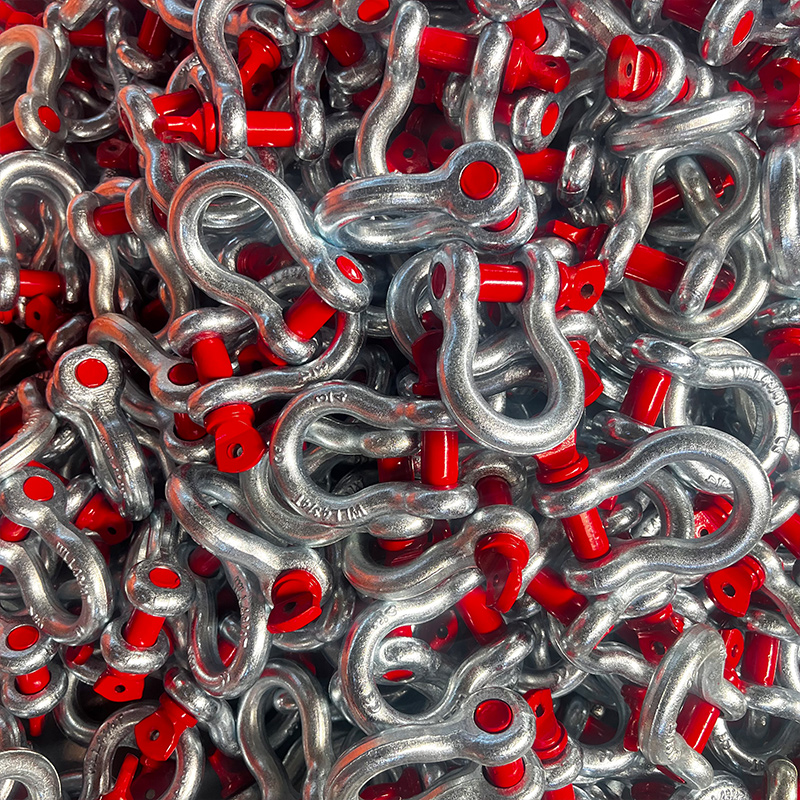
You use a bow shackle when you need a strong connector for lifting or rigging. The bow shackle has a big, rounded shape. This shape gives you extra space inside. You can attach more sling legs or connect to load rings. You see bow shackles in construction, shipping, and heavy engineering. The rounded bow lets you move loads from different directions. This makes it more useful than a D-shackle. When you attach many sling legs, the load spreads out. This helps stop damage to the sling and the shackle.
At Hebei Anyue Metal Manufacturing Co., Ltd., we make high-quality bow shackles for customers around the world. Our products follow strict international rules. They work for many jobs, like shipbuilding and mining.
Key Features
Bow shackles have features that make them important for lifting and rigging:
Large, rounded bow for many connections
Can handle loads from different directions without side loading
Strong and tough build with premium alloy steel
Different finishes, like Hot-dip galvanized shackle and Electroplated zinc shackle, for better rust protection
Tip: Always look at the markings on your bow shackle. You should find the working load limit, size, and maker’s name. This helps you pick the right shackle for your job.
Here is a table with important material facts for heavy-duty bow shackles:
Property | Description |
Working Load Limit | The most weight in pounds for safe, undamaged shackles under direct pull. |
Proof Load | The weight used to test the shackle’s strength, making sure it can hold the right load. |
Breaking Load | The weight where the shackle breaks, which is important for safety in tough jobs. |
At Hebei Anyue, we use advanced CNC forging and heat treatment to make our shackles stronger than the national standard by over 30%. Our products go through three quality checks, including spectral, hardness, and load tests. We have ISO 9001:2015 and CE certifications, so you can trust the safety and quality of every bow shackle you use.
Bow Shackle Types
You can find different types of bow shackles for your needs. The main types are:
Standard Bow Shackle: Good for general lifting and rigging. The wide bow lets you connect more slings or ropes.
Anchor Bow Shackle: Like the standard type but with a bigger bow. This type works well when you need to connect to anchor points or move loads from different angles.
Screw Pin Bow Shackle: Simple to put on and take off. You use this type for quick connections.
Bolt Type Bow Shackle: Has extra safety with a bolt and nut. This type is best for long-term or permanent jobs.
Specialty Finishes: Pick a Hot-dip galvanized shackle for outdoor or marine use, or an Electroplated zinc shackle for better rust protection.
Bow shackles follow strict international rules. In North America, the ASME B30.26 rule needs a safety factor of 5:1 and proof testing to twice the working load limit. In Europe, the EN 13889 rule needs a 6:1 shackle safety factor and CE marking. At Hebei Anyue, we make bow shackles that meet or beat these rules, so you can use them safely anywhere.
Bow shackles give you choices for many jobs. You can use them in lifting, rigging, shipping, and construction. Their shape lets you move loads from many directions, making them more useful than other shackles.
Applications
Lifting and Rigging
A bow shackle helps you connect chains, ropes, or slings. You use it when lifting or moving heavy things. It keeps loads safe in construction, engineering, and mining. The round shape lets you add more sling legs. This spreads out the weight and lowers stress. Bow shackles are good for daily lifting jobs. They follow strict rules like ISO 9001 and CE. These rules mean the shackles pass hard tests for strength and safety.
Safety Tip: Always look at the working load limit before using a bow shackle. This helps keep your lifting job safe and stops accidents.
Marine and Shipping
Bow shackles are common on ships and docks. They join anchor chains, mooring lines, and cargo slings. Saltwater and sea air can make metal rust. You need the right material for marine jobs. Stainless steel and galvanized steel are best for these places. Hot-dip galvanized shackles also fight rust near the sea.
Material Type | Application |
Stainless Steel | Marine use |
Galvanized Steel | Marine use |
Alloy Steel | Industrial heavy lifts |
Hot-dip Galvanized | Coastal applications |
Bow shackles from trusted brands like Hebei Anyue give extra rust protection. You can use them for a long time without worry.
Industrial Uses
Many industries use bow shackles every day. You see them in factories, shipping, oil and gas, and heavy engineering. These jobs need bow shackles to lift heavy things and connect from many angles. In mining and engineering, bow shackles help move big objects safely and fast.
Picking the right shackle keeps you safe.
Good shackles make lifting easier and faster.
They are important in places with heavy loads, like mining and engineering.
Bow shackles have a big, round shape that stops bending. This design keeps your tools safe and your work smooth. You can trust bow shackles that meet world safety rules.
Using Bow Shackles Safely
When you use a bow shackle, you must be careful. Safe steps help keep your lifting jobs safe. They also make your equipment last longer. If you follow the right process, you can stop accidents. You also avoid wasting time and money. Always pick, install, and check your shackles the right way.
Step-by-Step Guide
Here are easy steps for using bow shackles:
Select the Right Shackle
Pick a bow shackle that fits your load. Check the working load limit. Make sure it works with your rigging system. Look for markings like size, load rating, and maker.
Inspect Before Use
Check new, changed, or fixed shackles before you use them. Make sure they meet safety rules. Look for damage or wear.
Install Properly
Put the shackle so the load sits in the bow. Do not let the load rest on the pin. Tighten the pin well. For big lifts, use a bolt-type shackle with a nut and cotter pin.
Check During Use
Watch the shackle while you lift. Make sure the pin stays tight. The load should not move or shift. Stop if you see bending or twisting.
Remove After Use
Take off the shackle when you finish. Clean it and keep it dry. This stops rust.
Tip: Look at your shackles every day before you use them. If you use them a lot, check more often. Once a year is enough for normal jobs. For hard jobs, check every month or every few months.
Inspection Checklist
Check all new or fixed shackles before use.
Look at shackles every day.
Do a full check once a year.
Remove shackles with damage, rust, or bad markings.
Safety Tips
You can stop most accidents by following easy safety tips. The table below shows what you should do to keep your bow shackle safe:
Safety Tip | Description |
Regular Inspections | Check often for early signs of damage or wear. |
Inspect for Damage | Look for stretching or wear over 10% of the shape. |
Examine for Corrosion | Check for rust or pits that can make the shackle weak. |
Look for Deformations | Find any bending, twisting, or cracks. |
Assess for Heat Damage | Look for color changes from heat. |
Pin Security | Make sure pins are tight before you use them. |
Avoid Overloading | Never go over the working load limit. |
Proper Storage | Keep shackles inside to stop rust and dirt. |
Note: If you have safety questions, ask your supplier for help. Many makers give support for load math, picking shackles, and even help on-site. Some companies offer lifetime care and fix problems fast.
Common Mistakes
You can stop problems if you know the most common mistakes with bow shackles:
Using the wrong lifting chain for the job.
Putting too much weight on the shackle.
Not checking shackles often, so damage is missed.
Keeping shackles in wet or dirty places, which causes rust.
Attaching the shackle the wrong way, making it weak.
Not balancing the load, which makes lifts unsafe.
Using broken or wrong parts in your rigging.
Not following safety rules when lifting.
If you feel unsure about your setup, ask your supplier for advice. Many companies, like Hebei Anyue, give field help, regular checks, care, fixing, and testing. This keeps your equipment safe and working well.
If you follow these steps and tips, your bow shackle will stay in good shape. You also keep your team safe.
You should learn about bow shackles and use them the right way. Good, certified shackles help stop accidents and protect your team. Always look at the working load limit before you use your gear. Check your equipment every time before you start. If you are not sure, ask experts or the company for help. Talking to professionals gives you these benefits:
Benefit | Description |
Quality and Safety | Experts test products and make sure they work well. |
Strong Track Record | Trusted brands follow safety rules and last a long time. |
Certifications | Certified shackles work for real lifting and show they care about safety. |
Check shackles before you use them.
Throw away shackles that are damaged or rusty.
Change bent pins as soon as you see them.
Doing these things helps keep your lifting jobs safe.
FAQ
What is the difference between a bow shackle and an anchor shackle?
You use a bow shackle for multi-directional loads. An anchor shackle has a larger, rounded shape. Both connect chains or ropes, but anchor shackle works better for anchor points and heavy lifting.
How do you choose the right bow shackle for your job?
You check the working load limit and size. You look for markings from the manufacturer. You pick a bow shackle or anchor shackle that matches your lifting needs and environment.
Can you use bow shackles in marine environments?
Yes, you can use bow shackles in marine jobs. You choose stainless steel or hot-dip galvanized shackles. These resist rust and work well with anchor shackle connections on ships and docks.
How often should you inspect your bow shackles?
You inspect bow shackles before each use. You check for damage, rust, or wear. You do a full inspection once a year. For anchor shackle and heavy-duty jobs, you inspect more often.
Where can you get technical support for bow shackles?
You contact your supplier or manufacturer. Many companies offer technical help, selection guidance, and safety training. You get support for anchor shackle and bow shackle products to keep your lifting jobs safe.

 English
 العربية
 Français
 Русский
 Español
 Português
 Deutsch
 italiano
 日本語
日本語 한국어
한국어 Nederlands
 Tiếng Việt
 ไทย
ไทย Polski
 Türkçe
 ພາສາລາວ
 ភាសាខ្មែរ
 Bahasa Melayu
 ဗမာစာ
ဗမာစာ தமிழ்
தமிழ் Filipino
 Bahasa Indonesia
 magyar
 Română
 Монгол
 қазақ
қазақ हिन्दी
 فارسی
فارسی Norsk
Norsk Svenska
 українська
 Ελληνικά
 Suomi
Suomi עברית
עברית Latine
 Dansk
Dansk اردو
اردو Shqip
Shqip বাংলা
বাংলা Afrikaans
 Gaeilge
 नेपाली
 Oluganda


