If you’re tired of heavy, corroded metal shackles that scratch gear or pose safety risks, a soft shackle is your ideal solution. Lightweight, flexible, and corrosion-resistant, soft shackles have become a go-to for marine enthusiasts, campers, off-roaders, and DIYers alike. Unlike traditional bow shackles—metal hardware designed for heavy fixed loads—soft shackles offer versatility and safety without sacrificing strength. In this comprehensive guide, we’ll walk you through crafting your own durable soft shackle, with expert insights, step-by-step instructions, and detailed measurements for different rope sizes to ensure precision.
Expert Perspectives on Soft Shackles
Animated Knots: Soft shackles serve as a robust, lightweight alternative to metal shackles, with hollow-braid rope being the preferred material. The final tightening of the lanyard (diamond) knot is non-negotiable, as a loose knot risks slipping during use.
L-36: Allen Edwards’ "Better Soft Shackle" design demands precise rope length calculations to ensure optimal performance. Equal tail lengths and rigorous knot tightening—using tools like vice-grip pliers—are essential for long-lasting durability.
Small Boats Monthly: You don’t need high-tech Dyneema to make a reliable soft shackle; ordinary cordage such as laid line, solid braid, or kernmantle works equally well. A combination of a lark’s head and stopper knot creates a secure connection for everyday use.
Mazzaella: Crafting a soft shackle involves three foundational steps: forming a noose, tying a symmetrical button knot, and burying the tails. Thinning tail strands and feeding them gradually into the braid maximizes the shackle’s overall strength.
IGKT Solent: Dyneema soft shackles stand out for their exceptional strength-to-weight ratio, with the diamond knot being the industry standard for securing loops. For added security, treating the diamond knot with a PVA glue-water mixture reinforces its hold.
Google Search: Soft shackles outperform bow shackles in flexibility and damage prevention, making them ideal for non-critical loads where metal hardware might scratch surfaces or corrode over time.
What You’ll Need (Materials & Tools)
Materials
Rope: Choose from hollow-braid rope, Dyneema, laid line, kernmantle, or solid braid—1/8″ (3mm) to 3/8″ (9.5mm) diameter is recommended for most applications. Dyneema offers maximum strength, while ordinary cordage works well for casual use.
Optional Add-Ons: PVA glue and water (for knot reinforcement), quick-release lanyard materials (paracord or thin Dyneema), and tape (to secure knots in place).
Tools
Fid: A commercial fid or homemade version (1/4″ copper tubing pounded to a smooth point works great).
Dull Pick/Knitting Needle: For separating rope strands and creating openings without snagging fibers.
Vice-Grip Pliers: To tighten knots securely and apply even tension.
Tape: Scotch tape or smooth tape to prevent rope fraying and mark measurement points.
Wire: Thin wire wrapped around cardboard (for burying tails into the braid).
Clamp (Optional): To hold the rope steady while tying knots.
Step-by-Step Guide to Making a Soft Shackle
1. Calculate Rope Length (Detailed Measurements by Rope Size)
Precise measurements are critical for a well-fitting soft shackle. Below is a detailed table of estimated measurements for common rope diameters (English and Metric) and popular shackle inner diameters (D). These values are derived from Edwards’ formula and industry standards, accounting for shrinkage (S = 1.2 for most sizes, unless noted) and rope stretch.
Rope Diameter (R)
Shackle Inner Diameter (D)
Rope Length Required
Mark 1 (Fid Exit)
Mark 2 (Fid Enter)
Max Load Diameter
Shackle Length (Tip to Knot)
1/8″ (3mm)
1″ (25mm)
22.8 in (57.9 cm)
2 in (5 cm)
4.5 in (11.4 cm)
0.4 in (1 cm)
5.8 in (14.7 cm)
1/8″ (3mm)
1.5″ (38mm)
28.6 in (72.6 cm)
2 in (5 cm)
6.2 in (15.7 cm)
0.7 in (1.8 cm)
8.1 in (20.6 cm)
3/16″ (4.8mm)
2″ (50mm)
37.4 in (95 cm)
3 in (7.6 cm)
8.6 in (21.8 cm)
1.1 in (2.8 cm)
10.9 in (27.7 cm)
3/16″ (4.8mm)
2.5″ (63mm)
44.2 in (112.3 cm)
3 in (7.6 cm)
10.3 in (26.2 cm)
1.5 in (3.8 cm)
13.2 in (33.5 cm)
1/4″ (6mm)
2″ (50mm)
44.4 in (112.8 cm)
4 in (10.2 cm)
9 in (22.9 cm)
1.2 in (3 cm)
11.9 in (30.2 cm)
1/4″ (6mm)
3″ (76mm)
56.7 in (144 cm)
4 in (10.2 cm)
12.4 in (31.5 cm)
2.0 in (5.1 cm)
16.5 in (41.9 cm)
3/8″ (9.5mm)
3″ (76mm)
72.3 in (183.6 cm)
6 in (15.2 cm)
16.8 in (42.7 cm)
1.8 in (4.6 cm)
20.8 in (52.8 cm)
3/8″ (9.5mm)
4″ (102mm)
89.1 in (226.3 cm)
6 in (15.2 cm)
21.5 in (54.6 cm)
2.7 in (6.9 cm)
27.1 in (68.8 cm)
Notes on Measurements:
All values are estimates—add 2–3 extra inches (5–7.6 cm) to the rope length to account for adjustments.
For D = 7/64″ (2mm) or 1/8″ (3mm), use S = 1.23; for D = 3/16″ (5mm), use S = 1.215 (adjust calculations if needed).
The "Max Load Diameter" is the largest object the closed soft shackle can fit around (smaller than D due to rope thickness).
2. Prepare the Rope
Mark measurement points: Use tape to mark "Mark 1" (fid exit) and "Mark 2" (fid entry) exactly as listed in the table for your rope and shackle size. For ordinary cordage, mark the point where the stopper knot will sit (add 3–4 inches to the tail length for knotting).
Tape rope ends: Wrap tape around both ends of the rope to prevent fraying, especially if using braided or Dyneema rope.
Split strands (if needed): For noose formation, split the rope strands evenly near the middle—ensure the same number of strands on each side for symmetry (critical for load distribution).
3. Form the Loop
For hollow-braid/Dyneema: Insert the fid through the rope from Mark 2 to Mark 1, creating a loop. Pull the outer rope through the inner rope and tighten the loop around a temporary anchor (like a piece of rope) to hold its shape. The loop’s inner diameter should match your desired D (use the table as a guide).
For ordinary cordage: Form a slip knot (Ashley’s #43 Noose) at one end. Push a bight through the loop to create a foundation for the stopper knot, then snug the hitch at the base—ensure the loop is large enough to pass the rope ends through (match the "Max Load Diameter" in the table).
4. Tie the Securing Knot
The right knot ensures your soft shackle stays secure. Choose based on your rope type:
Diamond Knot (Dyneema/Hollow-Braid):
Loop one tail under itself, then place the second tail under the first loop.
Bring the second tail over the first tail’s standing part, under its working part, and through the loop’s edge.
Wrap both tails around the knot’s legs and pull through the central opening—wrap 4–5 times for smaller rope sizes (1/8″–3/16″) and 5–6 times for larger sizes (1/4″–3/8″).
Tighten gradually until the knot feels hard (like a wooden ball)—this prevents slipping, especially critical for thinner ropes.
Button Knot (Ordinary Cordage):
Tie a two-strand wall knot, followed by a half knot.
Open the half knot to create space for the tails—wider openings work better for thicker ropes (3/8″).
Pass each tail through the central holes (one on either side) for symmetry.
Tighten the knot until all strands lie flat and even—thicker ropes may require pliers for extra tension.
5. Tighten & Reinforce
Apply tension: Use vice-grip pliers to pull the knot tight (gentler pressure for 1/8″ rope to avoid damaging fibers) or hang the shackle and apply body weight. A properly tightened knot should sound like a marble when tapped on a hard surface.
Bury the tails (for braided rope):
Thin the tail ends: For 1/8″–3/16″ rope, cut 1/3 of the strands 1 inch from the end; for 1/4″–3/8″ rope, cut half the strands (or thin in two places for gradual reduction).
Feed the wire through the braid near the knot—insert 1 inch from the knot for small ropes, 1.5 inches for larger ropes.
Attach one tail to the wire and pull it through the braid—pull 2 inches for 1/8″–3/16″ rope, 3 inches for 1/4″–3/8″ rope.
"Milk" the rope from the knot down to the tail—this hides the tail completely inside the braid for a clean finish.
Reinforce (optional): For Dyneema shackles, dip the diamond knot in a 50/50 PVA glue-water mixture—let dry for 24 hours to boost security, especially for larger rope sizes.
6. Trim Excess
For 1/8″–3/16″ rope: Trim tails to 1/4 inch if the knot is fully tight; leave 0.5 inches for adjustability.
For 1/4″–3/8″ rope: Trim tails to 1/2 inch if tight; leave 1 inch for adjustability.
Avoid trimming until you’ve tested the shackle—loose knots may pull in tail length as they settle, especially with thicker ropes.
Soft Shackle vs. Bow Shackle: When to Use Which?
Understanding the difference between soft shackles and bow shackles helps you choose the right tool for the job:
Soft Shackles: Ideal for lightweight, flexible connections. They shine in marine rigging (securing sails or jib sheets), camping (hammocks, tents), off-roading (tow straps, winch lines), and securing gear on roof racks. Their soft material reduces injury risk if they strike a person and won’t scratch woodwork or metal.
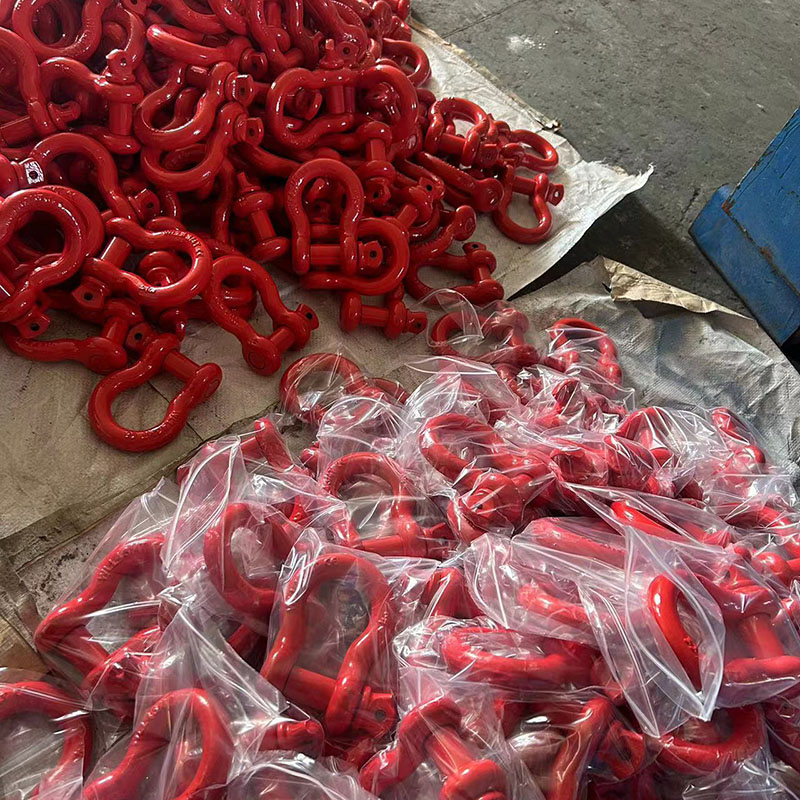
Bow Shackles: Designed for heavy-duty, fixed-load applications. Made of metal, they offer superior abrasion resistance and are commonly used in construction, industrial settings, or situations requiring maximum load-bearing capacity. However, they’re heavier, prone to corrosion, and can damage delicate surfaces.
Pro Tips for Durability & Safety
Match rope size to load: 1/8″–3/16″ soft shackles work for light loads (camping gear, small boat rigging); 1/4″–3/8″ are better for medium loads (tow straps, roof racks). Avoid using soft shackles for heavy loads that would require a bow shackle.
Avoid sharp edges: Soft shackles (especially Dyneema) are susceptible to abrasion—use a sleeve or padding around sharp surfaces, especially with thinner ropes (1/8″).
Protect from UV and heat: Prolonged sun exposure degrades Dyneema over time; store shackles in a cool, shaded place. High heat (over 150°F/65°C) can melt fibers—keep away from exhaust pipes or friction points.
Test before critical use: Soft shackles typically hold 175% of the rope’s strength. For example, a 1/4″ Dyneema rope with a 4,000-lb load rating will make a soft shackle that holds ~7,000 lbs—test with 50% of the maximum load first.
Add a quick-release lanyard: For marine or automotive use, a quick-release lanyard (made of paracord for small shackles, thin Dyneema for larger ones) makes detachment easier in emergencies.
FAQs
Q1: Can I use regular rope instead of Dyneema to make a soft shackle?
Yes! Ordinary cordage like laid line, solid braid, or kernmantle works well for casual use. Dyneema is better for high-strength applications, but regular rope is affordable and easy to work with for non-critical loads. Stick to 1/4″–3/8″ regular rope for better durability—thinner regular rope (1/8″) may fray faster.
Q2: How tight should the diamond or button knot be?
The knot should be extremely tight—when tapped, it should feel hard like a marble. For 1/8″–3/16″ rope, use gentle pressure with pliers to avoid breaking fibers; for 1/4″–3/8″ rope, apply firm tension with vice-grips. A loose knot risks slipping, especially with thinner ropes.
Q3: What’s the maximum load a DIY soft shackle can handle?
Performance depends on the rope type and knot quality:
3/8″ Dyneema: ~18,000 lbs; 3/8″ regular rope: ~8,000 lbsAlways check the rope’s load rating before use—soft shackles should never exceed 50% of the rope’s maximum load for safety.
Q4: How do I prevent my soft shackle from slipping or fraying?
Tighten the knot thoroughly, tape rope ends to prevent fraying, and avoid using the shackle on sharp surfaces. For extra security, reinforce the knot with a PVA glue-water mixture (more critical for thinner ropes). For fray-prone regular rope, apply a small amount of fabric glue to the cut ends.
Q5: When should I choose a bow shackle over a soft shackle?
Opt for a bow shackle for heavy-duty, fixed-load applications (e.g., lifting heavy equipment, industrial rigging) where abrasion resistance and maximum load capacity are critical. Soft shackles are better for lightweight, flexible, or non-critical uses—they can’t match bow shackles’ load capacity for extreme tasks.
Conclusion
Making your own soft shackle is a cost-effective, rewarding DIY project that delivers a versatile alternative to metal bow shackles. With the detailed measurement table for different rope sizes, you can craft a shackle tailored to your specific needs—whether for boating, camping, off-roading, or everyday use. Remember to prioritize precise measurements (use the table as your guide), tight knots, and size-appropriate materials to ensure reliability. By following this guide, you’ll avoid the high cost of store-bought options and gain a tool that’s lightweight, safe, and built to last.

 English
 العربية
 Français
 Русский
 Español
 Português
 Deutsch
 italiano
 日本語
日本語 한국어
한국어 Nederlands
 Tiếng Việt
 ไทย
ไทย Polski
 Türkçe
 አማርኛ
አማርኛ ພາສາລາວ
 ភាសាខ្មែរ
 Bahasa Melayu
 ဗမာစာ
ဗမာစာ தமிழ்
தமிழ் Filipino
 Bahasa Indonesia
 magyar
 Română
 Čeština
 Монгол
 қазақ
қазақ Српски
 हिन्दी
 فارسی
فارسی Kiswahili
 Slovenčina
 Slovenščina
 Norsk
Norsk Svenska
 українська
 Ελληνικά
 Suomi
Suomi Հայերեն
 עברית
עברית Latine
 Dansk
Dansk اردو
اردو Shqip
Shqip বাংলা
বাংলা Hrvatski
 Afrikaans
 Gaeilge
 नेपाली
 Oluganda