Shackles are the unsung heroes of rigging, lifting, and load-securing operations—small yet robust U-shaped connectors that keep industries moving safely. Whether you’re hoisting steel beams on a construction site, mooring a vessel offshore, or rigging stage equipment for a concert, these versatile tools form the critical link between lifting gear and loads. Among the various types, the bow shackle stands out for its flexibility in handling multi-directional forces, making it a staple in high-stakes applications. Understanding how shackles work, their key types (especially bow shackles), and safety best practices is essential to avoid accidents, protect equipment, and ensure operational efficiency.
What Are Shackles? Definition & Core Purpose
At their core, shackles are U-shaped metal fasteners secured by a removable pin or bolt across the opening. Their primary function is to create a secure, reusable connection between lifting equipment—such as cranes, hoists, or winches—and slings, chains, ropes, or the load itself. Designed to withstand extreme tension, shackles are engineered with a clear Working Load Limit (WLL) marking, which indicates the maximum safe load they can carry without failure. This marking is non-negotiable; ignoring it puts workers, equipment, and cargo at severe risk. Beyond lifting, shackles are also used for towing, anchoring, and securing loads during transit, making them indispensable across countless industries.
Key Types of Shackles: Spotlight on the Bow Shackle
Shackles come in several designs tailored to specific load types and environments, but the bow shackle (often called an anchor shackle) is one of the most versatile. Here’s a breakdown of the main types, with a focus on the bow shackle’s unique advantages:
Common Shackle Types
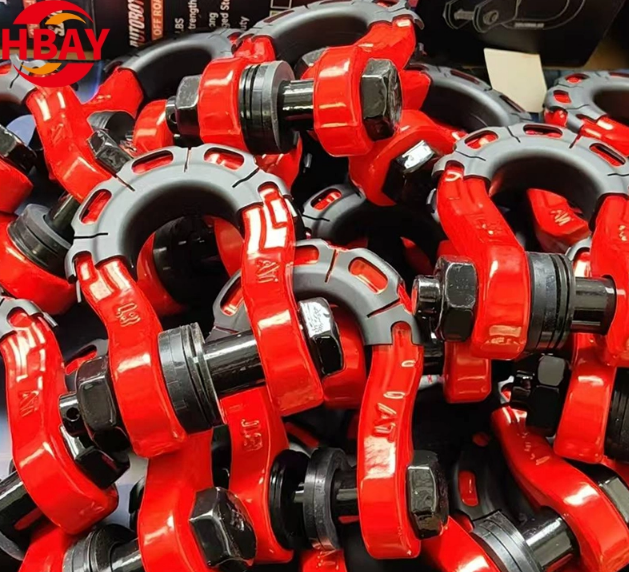
Bow Shackle (Anchor Shackle): Features a wide, rounded “O” or horseshoe-shaped bow that allows for multi-directional loading. Unlike narrower designs, it can safely handle angular pulls, side loads (with adjustments), and connections to multiple sling legs—making it ideal for complex rigging tasks.
D Shackle (Chain Shackle): Has a narrow, D-shaped body optimized for straight-line pulls. Its compact design works well in tight spaces but is unsuitable for side loading, as it may bend or warp under angular forces.
Screw Pin Shackle: Equipped with a threaded pin that screws into the shackle body for quick installation and removal. Perfect for temporary or repetitive tasks, but not recommended for high-vibration environments (the pin may loosen over time).
Bolt-Type Shackle: Uses a bolt, nut, and cotter pin for maximum security. Resistant to loosening, it’s the top choice for permanent installations, heavy lifts, and offshore operations.
Wide Body Shackle: Boasts an extra-wide bow to distribute load evenly, reduce sling wear, and extend equipment life—ideal for heavy-duty lifting and synthetic slings.
Why Bow Shackles Stand Out
The bow shackle’s rounded design is its greatest strength. It accommodates multi-leg slings without concentrating stress on a single point, making it perfect for lifts that require flexibility. Whether you’re dealing with angular pulls in marine settings or complex bridle rigging in construction, the bow shackle adapts to diverse load directions while maintaining stability. Unlike D shackles, which are limited to linear tension, bow shackles can handle side loads (with a reduced WLL) and are often the go-to for applications where load angles may shift unexpectedly.
Primary Uses of Shackles Across Industries
Shackles are ubiquitous in industries that rely on lifting, securing, or moving heavy loads. Here’s how they’re applied—with a focus on where bow shackles shine:
Construction & Infrastructure
Shackles connect slings to steel beams, precast concrete panels, and heavy machinery, enabling cranes to lift and position materials safely. Bow shackles are particularly valuable here, as they can handle the angular pulls common in complex construction layouts and work with multi-leg slings to distribute weight evenly. Screw pin bow shackles are also popular for their quick setup, ideal for repetitive lifting tasks on busy job sites.
Marine & Offshore
In corrosive saltwater environments, shackles must resist rust while handling dynamic loads. Stainless steel or galvanized bow shackles secure mooring lines, anchor chains, and deck hardware, as their rounded design accommodates the shifting angles of waves and currents. Bolt-type bow shackles are preferred for permanent offshore installations, as they won’t loosen under constant vibration.
Oil & Gas & Mining
These industries demand shackles that can withstand extreme loads, vibrations, and harsh conditions. Bolt-type and wide body bow shackles are used to rig drilling equipment, lift heavy pipes, and secure mining machinery. Their ability to handle multi-directional forces and resist wear makes them critical for preventing catastrophic failures in high-risk operations.
Transportation & Logistics
Shackles secure cargo chains, load binders, and tow straps during transit, absorbing shock loads to keep goods stable. Screw pin bow shackles are ideal for temporary cargo securing, while bolt-type variants work for long-haul shipments. In towing, bow shackles connect recovery straps to vehicles, handling the sudden tension of pulling without breaking.
Entertainment & Theatrical Rigging
Behind the scenes at concerts, plays, and events, theatrical shackles (often bow-shaped for versatility) provide hidden strength for rigging lighting trusses, sound equipment, and stage backdrops. Their black finish blends into dark stage environments, while their ability to handle multi-directional loads ensures safety during quick setup and teardown.
Agriculture & Forestry
Shackles are used to tow farm equipment, lift harvests, and secure logging loads. Galvanized bow shackles resist outdoor corrosion, making them suitable for fieldwork, while their multi-leg compatibility helps distribute the weight of heavy logs or bales.
Safety Essentials for Using Shackles (Including Bow Shackles)
Safe shackle use is non-negotiable—even a small mistake can lead to dropped loads, equipment damage, or serious injury. Follow these critical guidelines:
Adhere to the Working Load Limit (WLL)
Never exceed the WLL marked on the shackle. This rating includes a built-in safety factor (typically 6:1), meaning a shackle with a 1-ton WLL won’t break until it’s subjected to at least 6 tons of force. This buffer accounts for unexpected stress, but it’s not extra capacity—overloading causes permanent deformation or catastrophic failure. For bow shackles used in side loading, reduce the WLL: 70% at angles up to 45°, 50% at 45–90°, and avoid loads beyond 90°.
Use Proper Connection Methods
When linking two shackles, the safest method is bow-to-bow—the curved surfaces fit securely, preventing rotation. Bow-to-pin connections are acceptable if the pin is fully secured, but pin-to-pin connections are dangerous. The small, round pins can roll against each other, loosening screws or creating unstable point loads that fail under tension.
Avoid Improper Loading
Center loads in the bow of the shackle (never on the pin) to distribute force evenly.
Never side-load D shackles—reserve side loads for bow shackles only.
Don’t connect multiple sling legs to a single pin; use a bow shackle’s wide bow to accommodate multiple legs safely.
Inspect Regularly
Check shackles before every use for:
Cracks, nicks, or gouges (especially in the bow or pin).
Corrosion, pitting, or heat damage.
Deformation (bending or warping) or metal loss exceeding 10% of original dimensions.
Illegible markings (replace if WLL, size, or manufacturer info is unreadable).
Loose or damaged pins (screw pins must be fully tightened; bolt-type pins need secure cotter pins).
Materials Used in Shackles: Choosing the Right One
A shackle’s material dictates its strength, corrosion resistance, and lifespan. Select based on your environment:
Alloy Steel: Extremely strong and heat-treated, ideal for heavy-duty lifting, construction, and mining. Offers high WLL for its size.
Stainless Steel: Superior corrosion resistance, perfect for marine, offshore, or chemical environments. A top choice for bow shackles in saltwater.
Galvanized Steel: Zinc-coated to resist rust, suitable for outdoor use (construction, agriculture, logistics). Cost-effective and durable for general applications.
Carbon Steel: Affordable and strong, best for indoor or dry industrial settings where corrosion isn’t a concern.
How to Choose the Right Shackle (With Bow Shackle Tips)
Selecting the right shackle (and bow shackle variant) depends on three key factors:
1. Load Requirements
Match the WLL to your expected load, accounting for dynamic forces (e.g., sudden pulls) and safety margins.
Choose a bow shackle if you need multi-directional loading, side loads, or multiple sling legs. Opt for a D shackle for straight-line pulls in tight spaces.
2. Environment
Corrosive settings (marine, offshore): Stainless steel or galvanized bow shackles.
High vibration (mining, oil & gas): Bolt-type bow shackles (resist loosening).
Temporary tasks (construction, events): Screw pin bow shackles (easy to install/remove).
3. Compliance
Ensure the shackle meets international standards like ASME B30.26 (North America) or EN 13889 (Europe). Look for legible markings: WLL, size, manufacturer name, and traceability codes.
Industry Experts’ Views on Shackles & Bow Shackles
Uulifting: Bow shackles deliver stable multi-directional lifts, and bow-to-bow is the safest way to link two shackles. Pin-to-pin connections are highly unstable and should never be used.
Kit Crosby team: Bow shackles (anchor shackles) are the most versatile for single or multiple sling legs, with their rounded bow design enabling angular loads without deformation.
Elko Wire Rope company: Bow shackles are ideal for marine, offshore, and construction industries due to their ability to safely handle angled loads and multiple sling connections.
Connect-KNKT: Bow shackles excel in multi-leg bridle connections and complex rigging layouts, with their wide bow reducing sling stress and extending equipment life.
Mockbee Co.: Bow shackles (anchor shackles) with rounded bows are suited for side loading and larger straps, making them a top choice for heavy industrial lifting.
Bishop Lifting: Bow shackles are a core component in rigging systems, pairing effectively with synthetic and wire rope slings for safe load transfer in construction and marine applications.
Conclusion
Shackles are the backbone of safe lifting and rigging—small but mighty tools that enable industries to operate efficiently. Among all types, the bow shackle stands out for its versatility, handling multi-directional loads, side pulls, and complex sling connections with ease. By understanding shackles’ core functions, choosing the right type (like a bow shackle for flexible loads), adhering to WLL, and following safety best practices, you can minimize risks and maximize performance. Whether you’re in construction, marine, or logistics, investing in high-quality, certified shackles tailored to your needs is the key to safe, successful operations.
FAQs
What are shackles primarily used for?
Shackles are used to securely connect lifting equipment (cranes, hoists) to slings, chains, or loads for lifting, towing, anchoring, and rigging across industries.
Why is a bow shackle preferred for multi-directional lifting?
A bow shackle’s wide, rounded design accommodates angular pulls, side loads, and multiple sling legs—unlike narrower D shackles, which are limited to straight-line tension.
How does side loading affect a bow shackle’s WLL?
Side loading reduces a bow shackle’s capacity: 70% of full WLL for angles up to 45°, 50% for 45–90°, and it’s not recommended beyond 90°.
What materials are best for marine-grade bow shackles?
Stainless steel or galvanized steel bow shackles offer superior corrosion resistance for saltwater environments.
What is the safest way to connect two bow shackles?
The bow-to-bow method is the safest, as it creates a stable connection that prevents rotation and pin loosening.

 English
 العربية
 Français
 Русский
 Español
 Português
 Deutsch
 italiano
 日本語
日本語 한국어
한국어 Nederlands
 Tiếng Việt
 ไทย
ไทย Polski
 Türkçe
 አማርኛ
አማርኛ ພາສາລາວ
 ភាសាខ្មែរ
 Bahasa Melayu
 ဗမာစာ
ဗမာစာ தமிழ்
தமிழ் Filipino
 Bahasa Indonesia
 magyar
 Română
 Čeština
 Монгол
 қазақ
қазақ Српски
 हिन्दी
 فارسی
فارسی Kiswahili
 Slovenčina
 Slovenščina
 Norsk
Norsk Svenska
 українська
 Ελληνικά
 Suomi
Suomi Հայերեն
 עברית
עברית Latine
 Dansk
Dansk اردو
اردو Shqip
Shqip বাংলা
বাংলা Hrvatski
 Afrikaans
 Gaeilge
 नेपाली
 Oluganda


