In industries ranging from construction and marine operations to agriculture and rigging, two U-shaped mechanical connectors often take center stage: shackles and clevises. While their similar designs lead many to use the terms interchangeably, understanding their distinct purposes, strengths, and limitations is critical for safety, efficiency, and compliance with industry standards. This guide dives deep into the differences between shackles and clevises, with a focus on the versatile shackle—including its popular variant, the bow shackle—and why choosing the right connector can make or break your operations.
Key Similarities Between Shackles And Clevises
Before exploring their differences, it’s important to acknowledge the foundational traits that link these two connectors.
Both shackles and clevises feature a classic U-shaped body, a design that allows them to securely attach chains, ropes, wire ropes, or equipment components. This shape distributes force evenly across the connector, enhancing stability during lifting, towing, or rigging tasks. Additionally, both rely on a pin or bolt to close the open end of the U-shape, creating a secure connection that can be detached when needed.
In terms of sizing, neither device is measured by the diameter of its pin or bolt. Instead, their size is determined by the diameter of the U-shaped body—a standard that ensures consistency across industries. Both also come in varying working load limits (WLL), allowing users to select the right tool for their specific load requirements, whether for light-duty towing or heavy-duty lifting.
Critical Differences Between Shackles And Clevises
While they share a basic shape, shackles and clevises are engineered for vastly different tasks. The following breakdown highlights their most important distinctions.
Primary Applications
Shackles are designed for heavy-duty, safety-critical tasks that demand reliability under extreme loads. They are the go-to choice for construction lifting, overhead rigging, marine mooring, and cargo securing—applications where failure could lead to catastrophic damage or injury. A standout variant, the bow shackle (also known as an anchor shackle), is particularly valued for multipoint connections, such as marine anchor chains or multi-leg slings, where loads may come from multiple angles.
Clevises, by contrast, excel in lighter, static, or semi-permanent applications. They are commonly used in agricultural towing (e.g., attaching plows or harrows to tractors), sailboat rigging adjustments, and mechanical linkages (such as hydraulic cylinders or control rods). Their design prioritizes quick assembly and disassembly over heavy-load capacity, making them ideal for tasks where frequent connection changes are needed but extreme strength is not required.
Load Capacity & Material Strength
Shackles are built to handle dynamic, multi-directional loads, which is why they are constructed from high-strength materials like alloy steel, stainless steel, or carbon steel. These materials undergo rigorous testing to meet industry standards (such as ASME B30.26) and are rated for specific working load limits (WLL) to ensure they can withstand the stresses of lifting and rigging. Stainless steel shackles, in particular, are corrosion-resistant, making them perfect for marine or outdoor environments.
Clevises are typically made from mild steel or aluminum, materials that offer sufficient strength for light to moderate loads but lack the durability needed for heavy lifting. They have lower WLL ratings and are not designed to handle dynamic or overhead loads—using a clevis for such tasks significantly increases the risk of failure.
Design Nuances & Flexibility
Shackles come in two primary designs, each tailored to specific load scenarios:
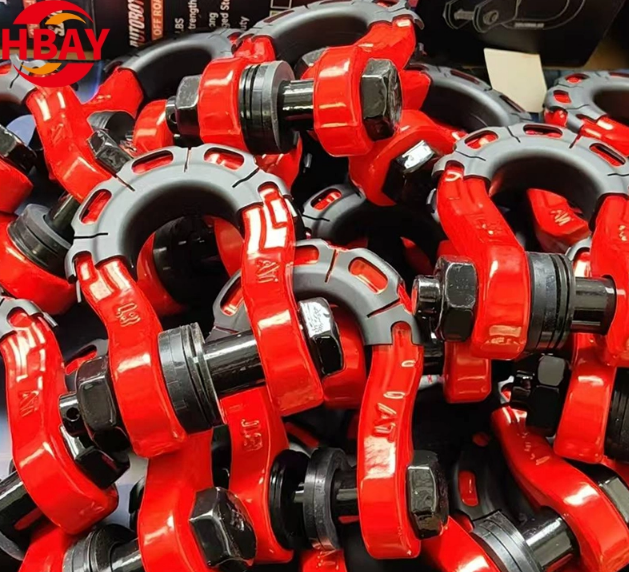
Bow Shackle (Anchor Shackle): Features a wide, O-shaped loop that accommodates multipoint connections and flexible load angles. This design makes it ideal for applications where the load direction may shift, such as marine mooring or lifting irregularly shaped objects.
D-Shackle (Chain Shackle): Has a narrow, D-shaped loop that resembles a chain link. It is designed for inline, single-direction loads, reducing rigging line movement and maintaining stability for tasks like construction hoisting or chain connections.
Clevises have a more compact, fixed U-shape with minimal flexibility. They are engineered to allow limited vertical or lateral movement (e.g., to absorb vibrations during agricultural towing) but cannot handle dynamic load shifts. Their rigid design prioritizes alignment and stability for static connections, rather than adaptability.
Pin/Bolt Types & Security
Shackles use threaded pins or bolts to secure their connections, often paired with cotter pins or lock nuts to prevent loosening due to vibration. This secure fastening system is critical for overhead lifting and heavy-duty applications, where accidental disengagement could have severe consequences. Screw pin shackles offer quick attachment, while bolt-and-nut designs provide maximum security for long-term or high-stress use.
Clevises rely on non-threaded clevis pins, which are secured with a simple cotter pin. This design allows for fast assembly and disassembly, making them convenient for agricultural or maintenance tasks. However, the non-threaded pin is less secure than a shackle’s threaded bolt, making clevises unsuitable for heavy or dynamic loads.
A Deep Dive Into Shackles (Core Focus)
As the more versatile and heavy-duty connector, shackles—especially the bow shackle—deserve a closer look at their types and applications.
Common Types of Shackles
Bow Shackle (Anchor Shackle)
The bow shackle’s defining feature is its wide, O-shaped loop, which sets it apart from the narrower D-shackle. This design allows it to distribute load evenly across multiple attachment points, making it ideal for tasks where loads may come from angles greater than 45 degrees. Common use cases include marine mooring lines, anchor chains, multi-leg slings, and lifting irregularly shaped equipment. Its flexibility and strength make it a staple in marine and construction industries, where adaptability to changing load directions is key.
D-Shackle (Chain Shackle)
The D-shackle’s narrow, chain-link shape is optimized for inline loads. It is designed to take force along a single axis, reducing rigging line movement and minimizing the risk of side loading (which can weaken connectors). D-shackles are commonly used in construction hoisting, chain assemblies, and cargo securing, where load direction is fixed and stability is a top priority.
Key Considerations for Choosing a Shackle
Selecting the right shackle—including deciding between a bow shackle and a D-shackle—requires careful consideration of your application:
Load Direction: Opt for a bow shackle if the load may come from multiple angles (e.g., marine rigging). Choose a D-shackle for inline, single-direction loads (e.g., construction lifting).
Load Capacity: Always select a shackle with a WLL that exceeds your actual load. Account for environmental factors like corrosion or extreme temperatures, which can reduce strength.
Material: Use stainless steel shackles for marine or outdoor applications to resist corrosion. Alloy steel or carbon steel shackles are ideal for heavy-duty construction tasks where strength is paramount.
Pin Type: Screw pin shackles are convenient for temporary connections, while bolt-and-nut designs offer maximum security for long-term or overhead use.
Practical Guide: When to Use a Shackle vs. a Clevis
Choosing between a shackle and a clevis boils down to three key factors: load size, application type, and flexibility needs.
Choose a Shackle If…
You need to handle heavy, dynamic, or overhead loads (e.g., lifting machinery, securing construction materials).
The application requires multipoint connections or flexible load angles (a bow shackle is the best choice here).
Compliance with safety standards (such as ASME B30.26) is mandatory for rigging or lifting operations.
You need a corrosion-resistant connector for marine or outdoor use (opt for stainless steel shackles).
Choose a Clevis If…
The task involves light, static loads (e.g., connecting agricultural implements to tractors).
Quick assembly and disassembly are priorities (e.g., temporary towing or maintenance tasks).
Limited vertical or lateral movement is needed to absorb vibrations (e.g., sailboat rigging adjustments).
The connection is semi-permanent and does not require frequent repositioning.
Maintenance & Safety Tips for Shackles (and Clevises)
Proper maintenance is essential to ensure the longevity and safety of both shackles and clevises. Here’s how to keep them in top condition:
Routine Inspection for Shackles
Before each use, visually inspect the shackle body and pin for wear, deformation, or cracks. Replace any shackle with more than 10% wear or visible damage.
Check threaded pins or bolts for damage to the threads or signs of loosening. For bow shackles used in marine environments, clean threads regularly to prevent corrosion.
Lubricate shackles periodically (especially stainless steel variants) to reduce friction and prevent rust.
Never exceed the rated WLL. Overloading is the leading cause of shackle failure in lifting operations.
Basic Maintenance for Clevises
Inspect clevis pins and cotter pins for bending, wear, or corrosion. Replace any damaged components immediately.
Ensure the U-shaped body has no excessive play or deformation, which can indicate fatigue.
Keep clevises clean and free of debris, especially in agricultural applications where dirt and debris can accumulate.
Industry Perspectives on Shackles vs. Clevises
Reid Supply: The primary distinction lies in working load limits and use cases. Shackles—crafted from alloy or stainless steel—are built for construction and lifting, with bow shackles excelling in multipoint connections. Clevises, meanwhile, are suited for agricultural towing and use non-threaded pins for easy disassembly.
Chainsaw Nerds: Shackles are engineered for dynamic, heavy loads (e.g., industrial lifting), while clevises are designed for static, light-duty tasks like machinery linkages. Bow shackles stand out for their ability to handle flexible load angles, making them more versatile than clevises in rigging applications.
QD Powerful: Shackles offer removable links for greater flexibility, with bow shackles capable of handling multi-directional loads. Clevises provide fixed connections for mechanical assemblies, focusing on fit and alignment over load capacity. Shackles adhere to strict strength ratings, while clevis designs are tailored to specific machinery requirements.
Ask Difference: Shackles are critical for crane lifting and rigging, with threaded pins and high safety standards to support heavy loads. Clevises connect moving mechanical parts (e.g., automotive rods) and allow rotational or lateral movement. Bow shackles are a key shackle type, offering the flexibility needed for heavy-duty, multi-angle applications.
Main Difference: Shackles feature U or O-shaped bodies (including bow designs) for load-bearing in rigging and marine settings. Clevises are U-shaped with pin holes, primarily used to attach tractor implements or wagon components. Shackles are the safer choice for high-stress, safety-critical tasks.
Difference BTW: Shackles can handle tension, compression, and multi-directional loads, making them ideal for marine and construction work. Clevises are designed for linear towing or pulling, with durability dependent on pin strength. Bow shackles, a popular shackle variant, are durable enough for harsh environments like offshore operations.
FAQs
1. What’s the main difference between a shackle and a clevis?
Shackles are heavy-duty connectors built for dynamic, multi-directional loads (e.g., lifting, rigging), with variants like the bow shackle offering flexibility for multipoint connections. Clevises are lighter, static connectors designed for tasks like agricultural towing or mechanical linkages, prioritizing quick assembly over heavy-load capacity.
2. Why is a bow shackle (anchor shackle) suitable for multipoint connections?
A bow shackle’s wide, O-shaped loop distributes load evenly across multiple attachment points, accommodating flexible load angles without compromising strength. This makes it ideal for applications like marine mooring or multi-leg slings, where the load direction may shift.
3. Can a clevis be used for overhead lifting?
No. Clevises have lower load capacities and less secure pin systems, making them unsafe for overhead or dynamic loads. Shackles—especially those with bolt-and-nut fastenings—are specifically engineered to meet the safety standards required for lifting operations.
4. What material is best for a shackle in marine environments?
Stainless steel (such as AISI 304 or 316) is the best choice for marine shackles. It offers excellent corrosion resistance against saltwater and harsh weather, ensuring longevity and reliability in mooring, anchoring, or rigging tasks.
5. How often should I inspect a shackle?
Inspect shackles visually before each use to check for wear, deformation, or damage. Conduct a detailed annual inspection (or more frequently for high-use or harsh-environment applications) to ensure compliance with safety standards. Replace any shackle that shows signs of damage or exceeds 10% wear.
Conclusion
While shackles and clevises share a U-shaped design, their purposes, strengths, and limitations are vastly different. Shackles—particularly the versatile bow shackle—are the backbone of heavy-duty industries, offering the strength, flexibility, and security needed for lifting, rigging, and marine operations. Clevises, by contrast, excel in lighter, static tasks where quick assembly and disassembly are priorities.
Choosing the right connector requires matching the tool to your load capacity, application type, and environmental conditions. By understanding the key differences outlined in this guide, you can ensure safety, efficiency, and compliance in every operation—whether you’re hoisting heavy machinery with a bow shackle or towing agricultural equipment with a clevis.
Remember: When in doubt, prioritize a shackle for high-stress or safety-critical tasks. Its robust design and strict industry standards make it the most reliable choice for operations where failure is not an option.

 English
 العربية
 Français
 Русский
 Español
 Português
 Deutsch
 italiano
 日本語
日本語 한국어
한국어 Nederlands
 Tiếng Việt
 ไทย
ไทย Polski
 Türkçe
 አማርኛ
አማርኛ ພາສາລາວ
 ភាសាខ្មែរ
 Bahasa Melayu
 ဗမာစာ
ဗမာစာ தமிழ்
தமிழ் Filipino
 Bahasa Indonesia
 magyar
 Română
 Čeština
 Монгол
 қазақ
қазақ Српски
 हिन्दी
 فارسی
فارسی Kiswahili
 Slovenčina
 Slovenščina
 Norsk
Norsk Svenska
 українська
 Ελληνικά
 Suomi
Suomi Հայերեն
 עברית
עברית Latine
 Dansk
Dansk اردو
اردو Shqip
Shqip বাংলা
বাংলা Hrvatski
 Afrikaans
 Gaeilge
 नेपाली
 Oluganda


